
The following article was published in conjunction with Truthdig.
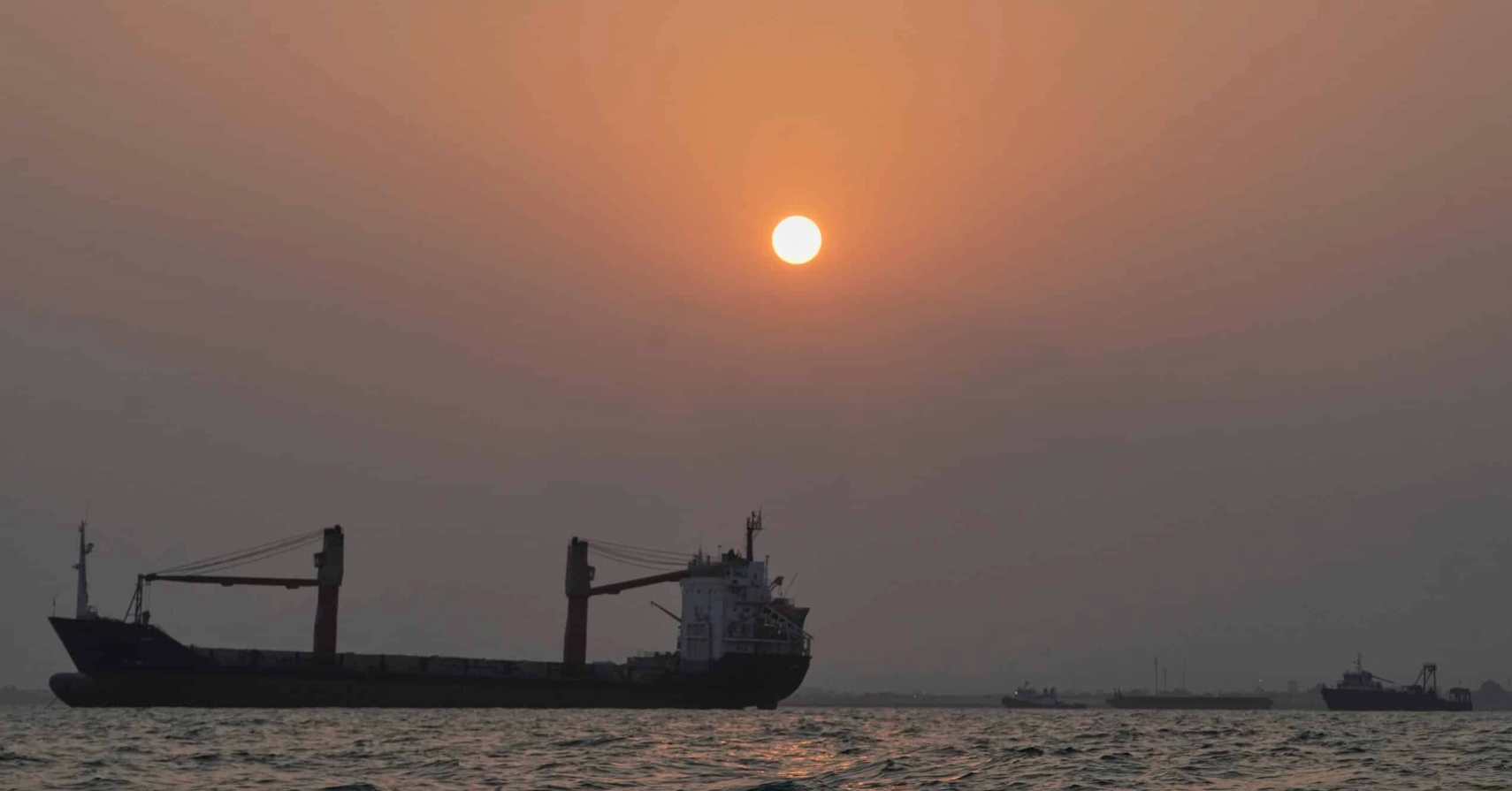
On Aug. 3, the Greek-owned, Liberian-flagged oil tanker Minoan Pioneer was hit by an Iranian drone 20 miles north of Oman in the Strait of Hormuz. As the ship’s crew struggled to put out a massive fire, the captain sent out calls for help, but none arrived and the sailors were forced to abandon ship. Three Indian crew members were killed, making it the deadliest shipping attack since the start of the U.S. war with Iran.
In total, at least 17 commercial sailors have been killed in the Strait of Hormuz since the U.S. began hostilities in February. Nearly half of the fatalities have been low-wage sailors from India whose contracts do not allow them the freedom to decline jobs that ply dangerous wartime routes.
“It is like putting somebody in prison and not giving them freedom to move,” Savio Ramos, general secretary of the Maritime Union of India, told The Guardian in August.
Amid the crossfire in the Strait of Hormuz, seafarers’ unions are fighting for the lives of their members.
“As attacks increase across countries in the region, transport workers are once again being pulled into this conflict that is not of their making — workers at airports, workers driving trucks, fishers, port workers and many more are all at grave risk,” says Stephen Cotton, general secretary of the International Transport Workers’ Federation.
So far, no American merchant marine sailors have been killed in the region, although there have been several near-misses when drones landed less than 200 yards away from ships crewed by U.S. workers.
While union sailors have the power to refuse to risk their lives in the Middle East, non-union sailors are often denied that right. And in recent months, when they have sought to join unions that would grant them that power, they have been denied the right.
“These guys are going through conflict zones and they have no say legally,” says Capt. Tom Larkin, vice president of the U.S.-based International Organization of Masters, Mates & Pilots. “They have no say in any of their conditions of employment right now. They’re stressed out.”
Since the start of the Iran war, maritime unions have won major protections for sailors working for shipping companies in conflict zones. In July, unionized companies that are signatories of the International Bargaining Forum’s labor agreements, which represent sailors on over 15,000 ships worldwide, agreed to double the pay of sailors working in the Strait of Hormuz. The agreement also gave any unionized sailor the right to refuse to work in the region.
“The benefit of having a union is the ability to look for other work without losing your benefits,” says a sailor who played a key leadership role in successful union drive at Overseas Shipholding Group, a subsidiary of Saltchuk Resources, whose ships have been deployed extensively in the Middle East during the conflict.
But the International Bargaining Forum agreement does not cover non-union sailors, and sailors with the Overseas Shipholding Group are outraged that the Trump administration has refused to cut off federal subsidies to Saltchuk Resources, an outlier in an industry in which more than 90% of all American-flagged ships are unionized.
In 2024, the masters, mates and pilots union won union elections at two Saltchuk subsidiaries: Alaska Tanker Co. (where the union won with 80%) and Overseas Shipholding Group (where it won with 70%). But for more than two years, the companies have refused to negotiate with their union. At the same time, their parent company, Saltchuk, continues to receive millions in subsidies under the federal Tanker Security program.
“They have some union agreements, which makes this thing completely unusual because they’re used to working with organized labor,” says Larkin, the union vice president, of Saltchuk’s refusal. “They have agreements with other unions working on board the same ship where the deck officers are unrepresented.”
In August, the National Labor Relations Board ordered one of the Saltchuk-owned subsidiaries, Overseas Shipholding Group, to bargain a first union contract with the masters, mates and pilots union. But the company refused, saying it would appeal the order before the 11th Circuit Court of Appeals in Georgia (a court dominated by anti-union Trump appointees.)
“It’s just another way to delay workers getting to the table as they face harm overseas,” said an exasperated Larkin.
A week after the company announced that it would appeal the NLRB’s order, the Iranian news agency Nournews named the Overseas Shipping Group among the companies that it would target for aiding the U.S. military in the Middle East.
“War is not only costly on the battlefield,” an Iranian military official told Nournews. “Those who, knowing the nature of the mission, provide the commercial and logistical infrastructure for military operations against Iran cannot expect their role to remain hidden from Iran.”
On Sept. 9, Iran announced a new offensive on civilian ships in retaliation for the United States sinking five Iranian oil tankers. “We warn [civilian sailors] that they must immediately abandon their vessel, whether in the anchorage or at the docks, as it will be targeted,” said the Iranian navy in a statement.
As hundreds of U.S. merchant ships continue to ply the waters of the Middle East, Larkin’s union continues to organize.
“We’re going to keep organizing because everyone deserves the right to a union, especially in a conflict zone with missiles and the drones,” says Larkin. “People are working 12 hours a day and they are exhausted and scared. Without a union, they’re at-will employees going into a war zone. It’s scary as shit.”