
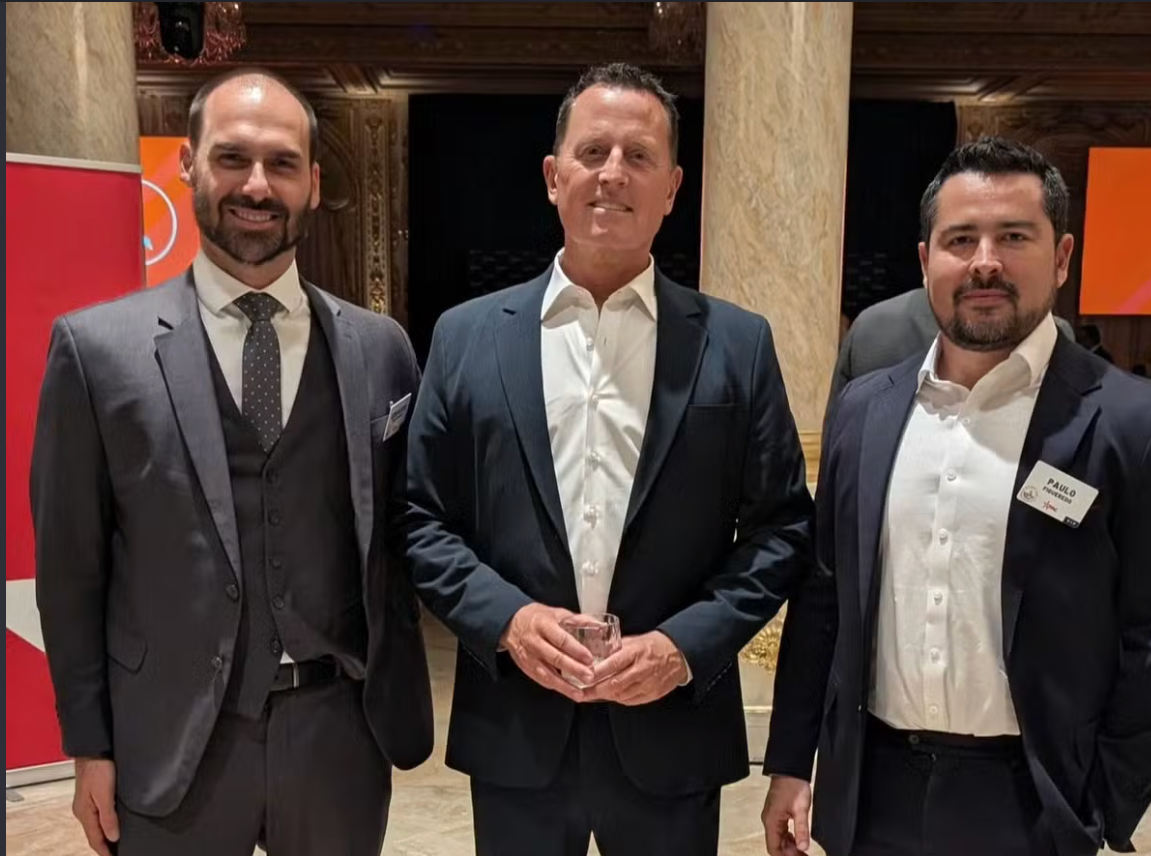
RIO DE JANEIRO, BRASIL - Trump’s former National Intelligence Director and current envoy for Brazilian relations, Richard Grenell, a close ally of Eduardo Bolsonaro, helped to organize a series of high-profile meetings between ICE intelligence officials and Brazilian intelligence officials at Pittsburgh’s Carnegie Mellon University. The meetings came as the Trump Administration has sought to label Brazilian drug gangs as terrorist groups and has repeatedly attacked Lula for being soft on crime and corrupt in the lead-up to this fall’s Brazilian election.
Pittsburgh's CMU was chosen in part because of its long-time affiliation with Trump’s former National Intelligence Director Richard Grenell, who has served on the faculty there. CMU, the world’s leading institution for AI technology development, is a major defense contractor that currently holds more than $1.2 billion in defense contracts and regularly engages in sensitive, secretive projects on behalf of the US federal government.
Grenell currently serves as Trump’s Special Presidential Envoy for Special Missions. He has been engaged in direct talks with the Lula Administration over punitive tariffs that Trump has placed on Brasil for convicting former Brazilian president Jair Bolsonaro of attempting to orchestrate a coup.
Grennell has worked closely with Eduardo Bolsonaro, the son of Jair Bolsonaro and brother of Flavio Bolsonaro, who polls show is locked in a neck-and-neck race for the presidency with Lula.
In March 2025, Eduardo Bolsonaro fled to the United States rather than face prosecution in Brasil for his role in trying to orchestrate a coup, and he was granted permanent residency status in July. While in the United States, Eduardo Bolsonaro has worked closely with Trump officials, including Grenell, to oust Lula from power.
“It was a privilege to speak with Ambassador Richard Grenell at President Trump’s residence at Mar-a-Lago,” Eduardo Bolsonaro wrote on Instagram following a meeting with Grennel in 2025. “The conservative movement is global—and we are just getting started.”
During the coup in Venezuela last January, Grenell played a key role in establishing back-door channels to Venezuelan officials who were open to seeing Maduro go. The meetings at CMU gave Grennel and his close network the chance to build contacts between intelligence officials in ICE and the FBI and several key figures in the Brazilian intelligence community.
Notably, the meetings at CMU, held from August 12th to August 15th, were paid for using funds from the U.S. State Department’s International Visitor Leadership Program, and held under the agenda of “U.S. Models for Countering Transnational Criminal Organizations: From Intelligence Fusion to AI-Driven Investigations.”
However, the meetings featured several top anti-corruption officials from the Trump Administration.
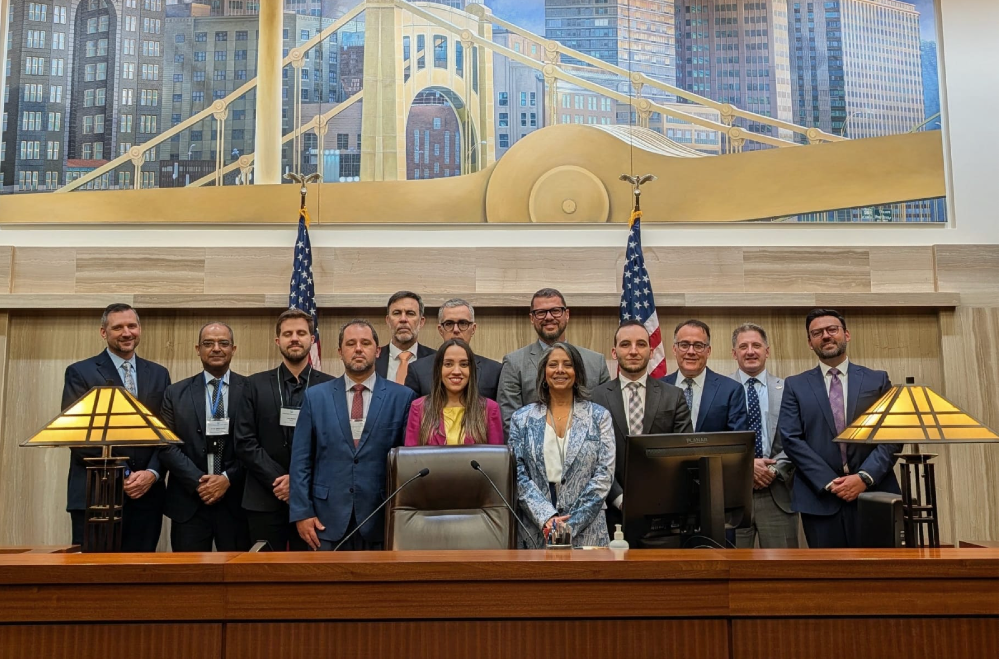
Representing the FBI at the meeting were Steven Huie, Supervisory Special Agent of the FBI’s International Corruption Unit, and Luis Aguirre, Senior Program Analyst at the FBI’s Counter Cartel Funding Unit. In addition to Timothy Stone, who leads ICE’s intelligence arm for international operations, HSI, top ICE officials were present, including Raymond A. Vega, Operations Chief, Central and South America, International Operations, HSI.
Paulo Carolis, a top state prosecutor in the Public Ministry of São Paulo. Carolis has led efforts to combat drug gangs and organized crime, battling groups like Primeiro Comando de Capital (PCC) and Comando Vermelho(CV)
The Trump Administration controversially has attempted to label the gangs as “terrorist organizations," something which the Lula Administration has repeatedly resisted because of fears of how the Trump Administration could intervene in the affairs of Brasil. Ahead of the Brazilian presidential election, the Trump Administration has labeled Brasil as a major distributor of cocaine and attempted to paint Lula as weak on taking on drug gangs.
Renaldo Lomba, public prosecutor and coordinator of the Security and Intelligence Coordination Office (CSI/MPRJ) of the Public Prosecutor's Office of Rio de Janeiro, was also present at the Pittsburgh CMU meeting. Yuri Fisberg, a state prosecutor in the Special Action Group for Combating Organized Crime (Gaeco) of the São Paulo Public Prosecutor's Office, was also present.
Lt. Col. Roberto Anjos, an intelligence officer in the Rio de Janeiro state military police and Coordinator of the Southeast Regional Integrated Intelligence Center, was also present, as was Mateus Picanço Pinaud, a prosecutor with the Special Action Group on Public Security (GAESP) in Rio de Janeiro.
As the Trump Administration seeks to publicly label the Lula Administration as corrupt and weak on taking on drugs leading into October’s presidential election, the meeting at Pittsburgh’s CMU between top Trump officials and the Brazilian intelligence officials allowed them to share intelligence and strategies.
With the Lula Administration regularly denying visas to Trump operatives, it's questionable whether many of the intelligence officials from ICE and the FBI would be allowed to enter Brasil so close to the election, making holding Pittsburgh CMU meetings less politically risky.
The Public Prosecutor’s Office do Estado de São Paulo (MSPS) that runs the GAECO program responded that the meetings were part of ongoing transnational efforts to combat organized crime.
“The MPSP notes that, given the transnational nature of criminal organizations, authorities from various countries—including Brazil, the USA, and Italy—have long collaborated to improve the fight against organized crime,” the MSPS wrote in a statement. “In this context, the event aimed to deepen the exchange of experiences between the two countries. Furthermore, the MPSP operates in a technical manner across all its divisions, free from any ideological bias—a fact evidenced by the success of the more than 230 operations conducted by GAECO since 2024.”
The meetings came at a time when Brazilian intelligence agency ABIN has publicly warned that American interference in the Brazilian presidential election has reached a “critical” level.
On Tuesday, while speaking at the United Nations, Lula pledged to take on attempts to interfere in the Brazilian presidential election.
“Democracy is once again under threat,” said Lula. “We are once again witnessing external interference in electoral processes, neocolonial drives for strategic resources.”
