
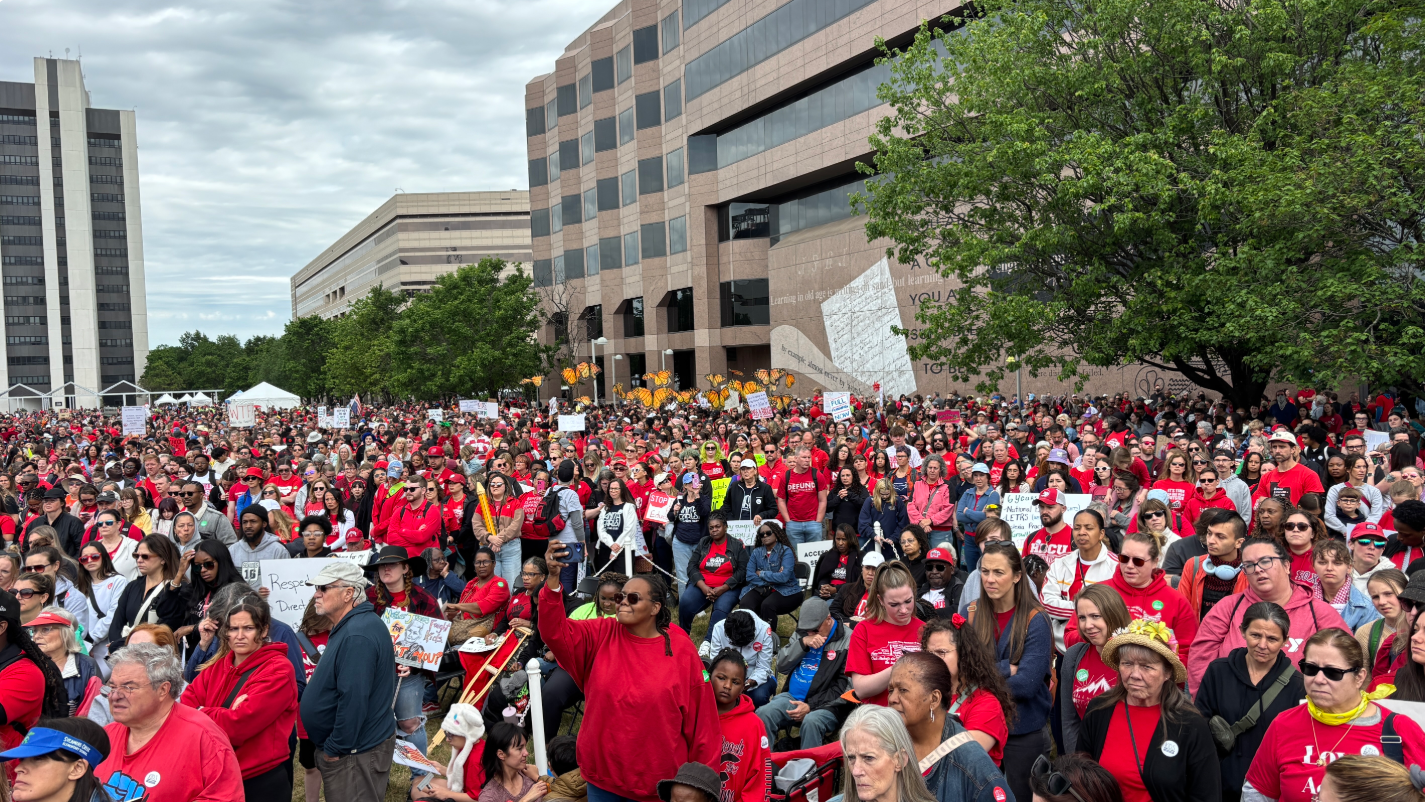
On Friday, teachers in North Carolina shut down the 22 largest county-wide school districts in their state. Districts including Durham, Chapel Hill, Raleigh, Asheville, Chatham County, Guilford County, Kannapolis City, and Winston-Salem all shut down.
While some major unionized cities struggled to get crowds of more than a few hundred at their May Day rallies, images of tens of thousands marching in red in downtown North Carolina took many by surprise. How did the state with the second-lowest rate of unionization in the nation, and where public employees lack collective bargaining rights, shut down nearly the entire school system of North Carolina?
Payday Report sat down to interview North Carolina AFL-CIO President Braxton Winston about how North Carolina was able to pull off the massive May Day walkout. Winston says that having the lowest unionization rate in the country meant that unions in North Carolina had to work extra hard at building community connections.
“We gotta give it up to the North Carolina Association of Educators (NCAE),” says Braxton. “These folks have been working very hard over the past few years, and they have the grit, and they have been working very hard to build solidarity across the state over many years.”
In 2018, teachers in North Carolina were able to shut down schools in many of the 40 county-wide districts as part of the #RedforEd movement. They encouraged teachers to take “personal days” and show up for a rally at the State Capitol called “It’s Personal.” (See Payday’s dispatch from Raleigh in 2018)
This experience showed teachers that many county school boards controlled by Democratic majorities were willing to work with teachers to give them the day off for a major protest like May Day.
“I think it's a good reminder for folks in this labor movement, that certainly there are things that can change immediately, but this is long work we operate in,” says Braxton. “These folks at NCAE certainly understand that. So they had a plan.”
With only 3% of North Carolina being unionized, Braxton says the labor movement in North Carolina is always finding ways to build community support.
“[Unions] might not have always been the best community partners. We'll go organize a shop, get what we need from the community, and move on. We can't do that here in North Carolina,” says Braxton. “We have to be good partners in the fights for things like affordable housing, economic justice, good paying jobs, and find ways to be part of the economic development conversations.”
Watch the full interview with North Carolina AFL-CIO President Braxton Winston.
