
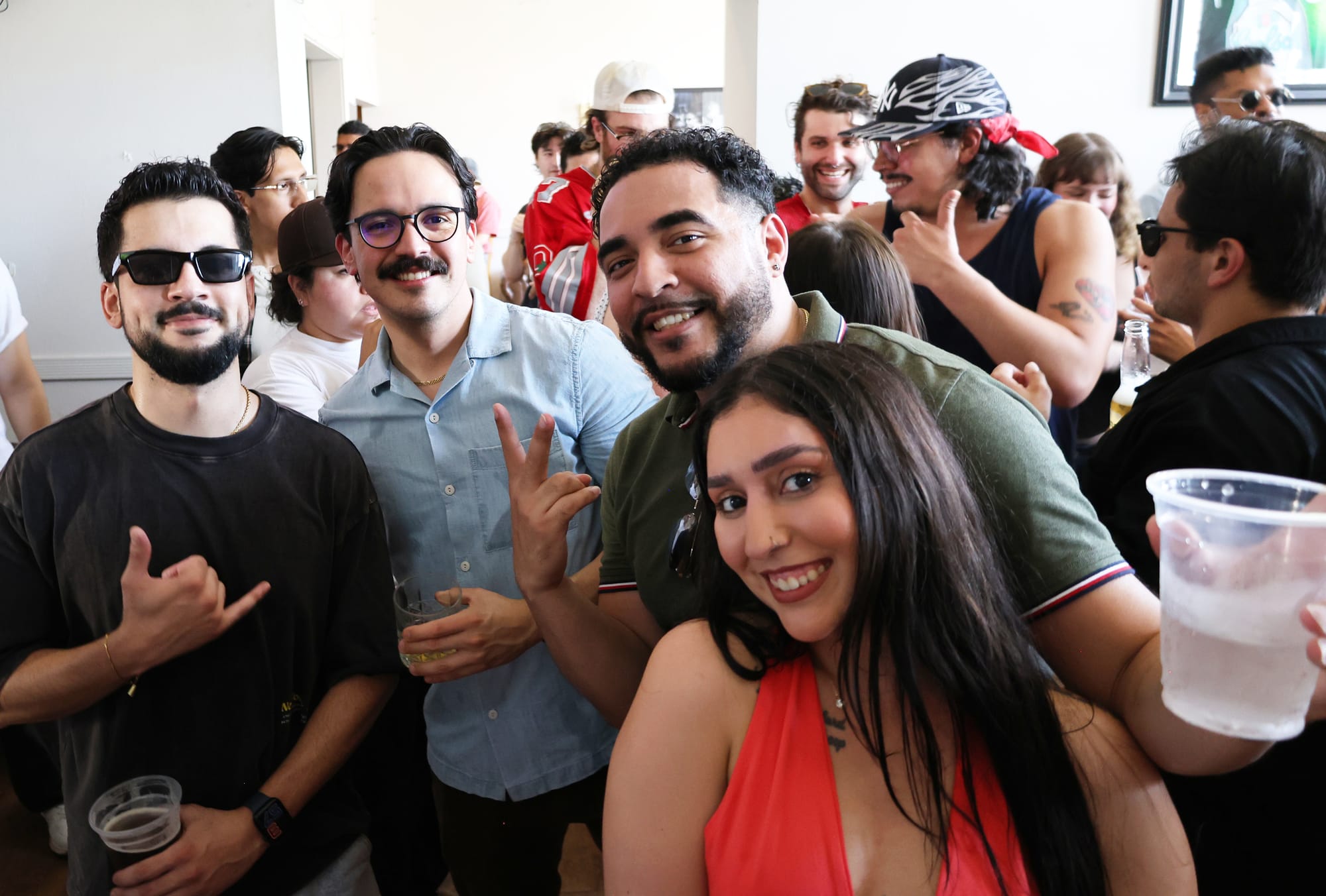
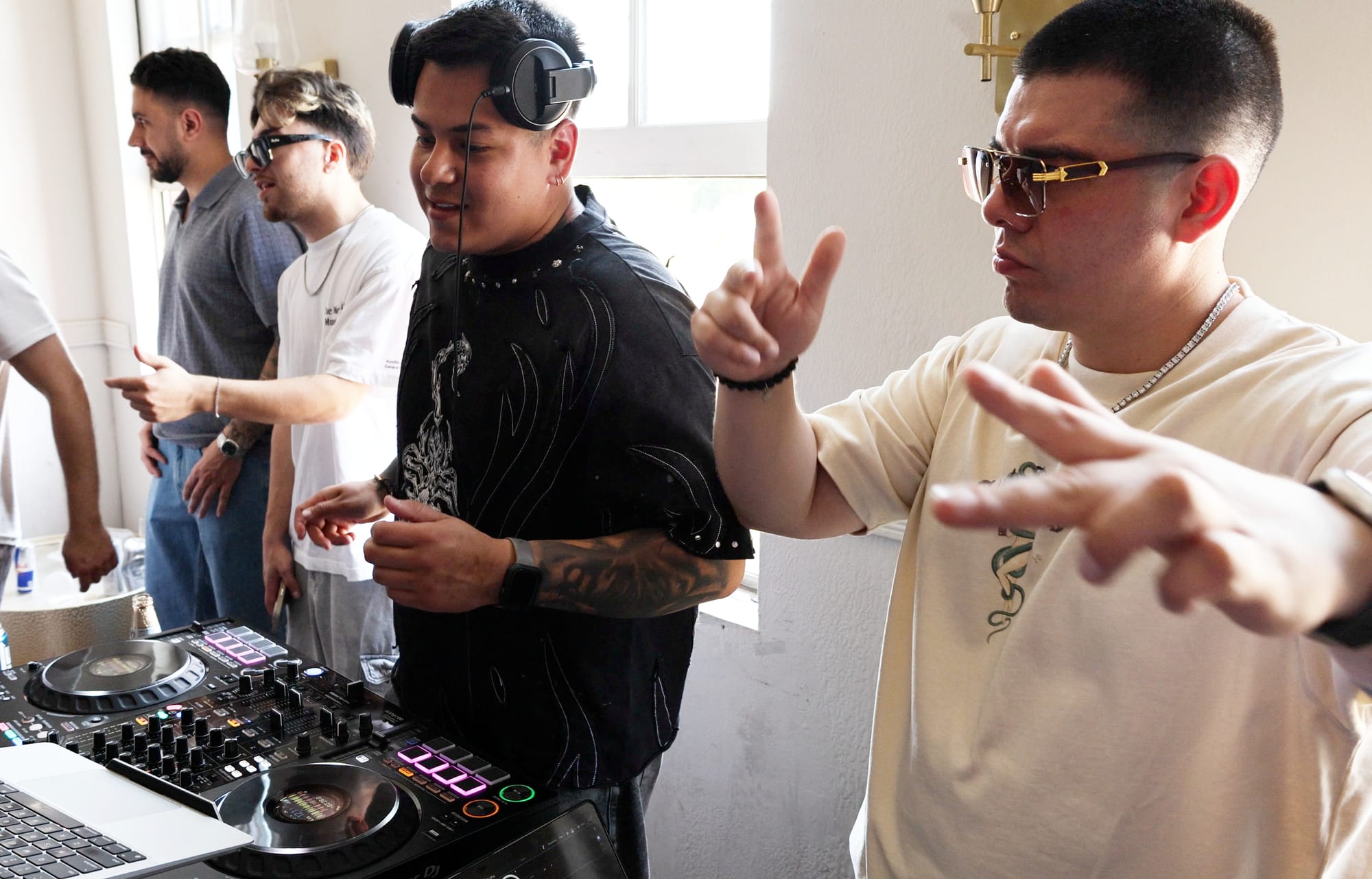
PITTSBURGH, PA. - On a Sunday afternoon late last month, the second floor of the Library Club on Pittsburgh’s South Side was bumping with Reggaeton spun by DJ Cesar, who works at Pittsburgh’s first Latino radio station, Radio Las Palmas.
The monthly party, known as Cafetón, has quickly become a “scene” in its own right, and one that is badly needed at a time when ICE is regularly conducting raids in Pittsburgh. The group organizing the parties, Latinas en Pittsburgh, have hired and trained their own security guards on what to do if ICE shows up.
“We all feel this intensity of what's happening with our family members, what's happening with our community, what's happening with my friends,” says Latinas en Pittsburgh founder Brenda Garcia, a 35-year-old Mexican immigrant who grew up in Pittsburgh. “We need an outlet, we need somewhere where we can just dance and not worry about our security, not worry about our safety.”
While many immigrant groups are organizing against ICE’s presence within the city and its collaboration with surrounding municipalities, the Cafetón party is focused on giving this besieged community a place to have fun and de-stress.
'Everyone just feels so overwhelmed, and it's so important to have a place where Latinos can just connect, come together, and have some fun,” says Garcia. “For so long, Latinos in Pittsburgh have felt so isolated, and now we are trying to build community.
In the 1980s and 1990s, few Latinos came to Pittsburgh as the mills closed and the region lost more than half of its population. In the past two decades, Pittsburgh’s resurgence as an “eds, meds, and tech” economy has the city growing again, including an influx of Latino residents.
The Latino population is currently 4.5% of Pittsburgh, and with even more moving here, many are looking for ways to build community.
“The Latino community is growing, but we needed a community to lean on, and so that's why I created this group,” says Garcia. “There have been so many Latinos that have come up to me after every event and been like, ‘I needed this so much, you have no idea how much I needed this.’”

The growth of events like Cafetón are driven in part by the resurgence of meetup culture as people abandon dating apps to seek new ways to meet people.
“Most people nowadays, they are just feeling really disconnected because they're going through apps, but they're not really meeting the people that they want to meet,” says Sam Perez, the founder of the meetup group Yinzer Meets. “Most times it takes an organizer like me, someone who makes them feel comfortable enough to come out to an event.”
Over the past few years, dating apps have seen a dramatic decline in use as psychologists warn about the negative psychological effects of perpetual dating. For many, the process of constantly searching, replying to messages, and rejection has led to burnout, as the majority of dates lack chemistry.
Studies have consistently shown that people who aren’t on dating apps are happier than people who are on them. At the same time, Americans are socializing in-person at half the rate compared to a decade ago, according to the US Census Bureau, making it hard for lonely young Americans to meet people for dating or friendship.
Fed up with dating apps and loneliness, meetup groups have re-emerged as a way to connect lonely people looking to meet new people. In Pittsburgh, there are more than a half-dozen professional event-throwing meetup groups, but Yinzers Meet has been unique in helping to promote the Latino community.
Yinzers Meet, run by Samuel Perez, a 30-year-old Cuban-American transplant from Miami, has held unique meetups across Pittsburgh, including not just parties, but also hikes, roller skating, baseball tailgates, and climbing wall sessions.
“When I first moved to Pittsburgh, I felt really disconnected and I wanted to do something to really bring people together. There are so many lonely people out there,” says Perez.
Yinzers Meet encourages people to “come solo and leave with friends.” Perez organizes ice-breakers and works the room, encouraging folks to meet one another and connect. Yinzers Meet works closely with groups like Latinas en Pittsburgh to throw parties and events that fill a niche in Pittsburgh.
“We have really seen that young Latinos are lonely and looking for a way to connect with people,” says Brenda Garcia.
Rick Rodriguez is a 30-year-old Puerto Rican aircraft mechanic who moved to Pittsburgh from Miami to take a job with American Airlines. Compared to Miami, he found it really hard to plug into local Latino culture.
"It's crazy, because there's not a lot of Spanish people in Pittsburgh,” says Rodriguez. “It’s good to just be able to go out and connect with folks.”
Frank Carpio is a 38-year-old filmmaker and Ecuadorian immigrant who moved to Pittsburgh from New Jersey nearly 20 years ago to attend college at Pitt. He says it took him a while to discover Pittsburgh’s Latino community.
“There are Spanish people here, but they're usually working, and out of the spotlight,” says Carpio. “It doesn't mean that we're not here, we're very much here, we're very much a part of this society and the city, but the thing is that we're not as visible as I would like us to be.”
At a time when many fear ICE, Carpio says that he sees a surge in activity and events that he hasn’t seen in the Latino community.
“ICE could be right outside - we're in a world now where that is a fucking possibility, that's shitty, but at the same time, that's not gonna stop Spanish people from having fun,” says Caprio.
Brenda Garcia, who does marketing for immigration law firms in Pittsburgh, says that not only are these events about having fun, but in many cases, they have helped immigrants get resources and support when needed. At a time when people are feeling lonelier than ever, and immigrants are facing unprecedented threats from ICE, meetup groups have helped foster a new sense of community in Pittsburgh’s Latino community.
“I think it has made our community grow even tighter,” says Brenda Garcia.
Video and photos by Amos Wolf
