
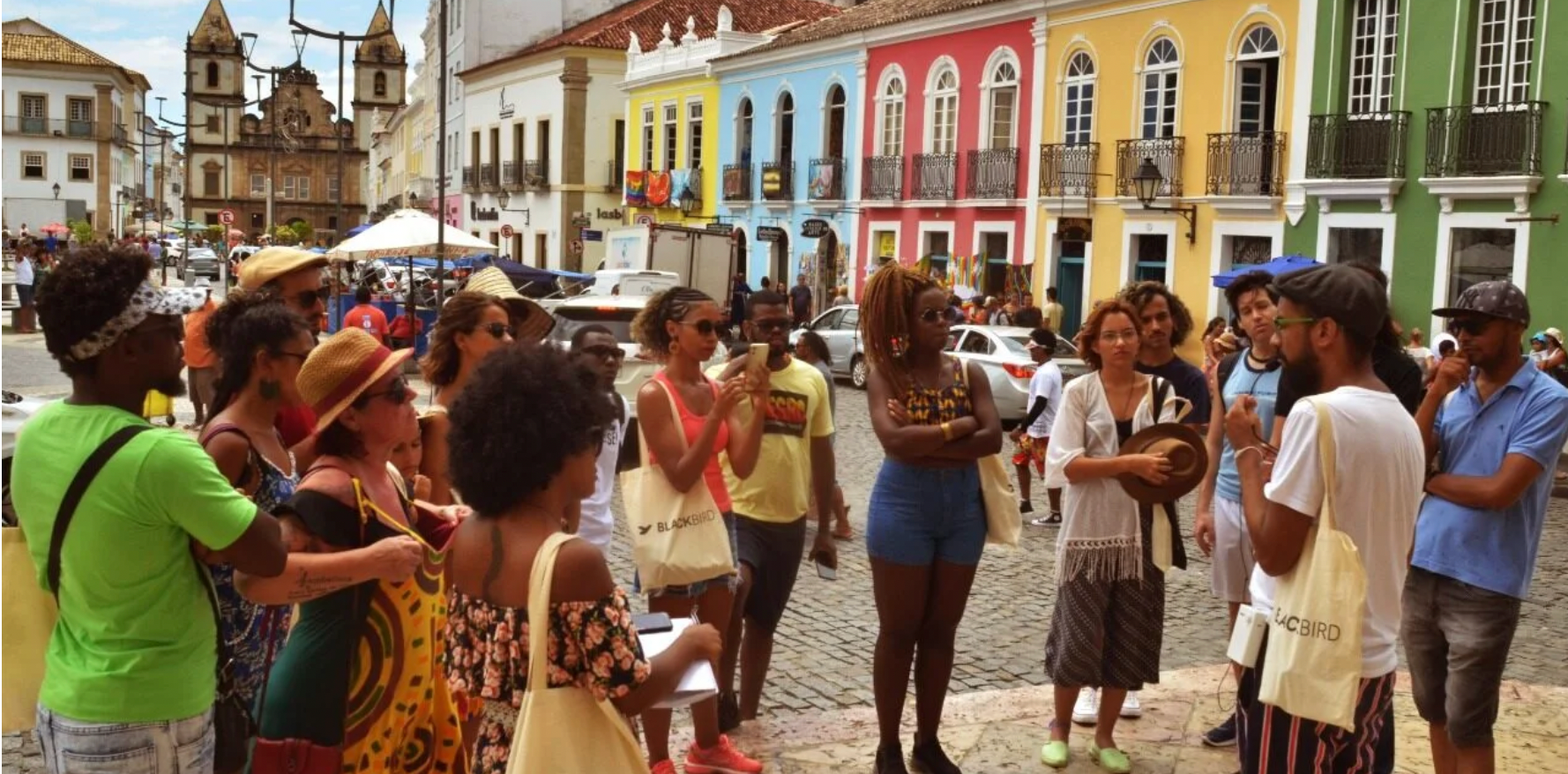
RIO DE JANEIRO, BRASIL - Over my past twenty years, traveling back and forth between Brasil and the United States, I’ve noticed a fascinating trend: the majority of the other Americans on the plane are African Americans.
Indeed, according to a study by the Brazilian government, revenue for Afroturism companies in Brasil has increased by 400% between 2023 and 2025. Now, more than 43 groups offer guided tours for African Americans, with interest amplified by social media and Instagram influencers. Groups like Guia Negra, Rede BATUC, Rota da Liberdade, AfroTrip, and Diaspora Black have helped tens of thousands of primarily African Americans tour Brasil.
“Overall, we are seeing a rise in “diaspora tourism”,” says Uju Anya, a professor at Carnegie Mellon University. “More and more blacks are interested in visiting other parts of the world where the black diaspora went”.
Of the 12 million enslaved Africans sent to the Americas, nearly 5.5 million went to Brasil. Today, 54% of Brazilians identify as Afro-Brazilians. Given these connections, the Brazilian Ministry of Racial Equality, in conjunction with several other ministries, has launched the Rotas Negras program to encourage both Afro-Brazilians and African Americans to go on tours that recognize the diaspora roots of Afro-Brazilians.
“Afro-tourism invites us to look at Brasil from the perspective of our roots, valuing territories, memories, and people who keep Black history alive every day. Each place is resistance, culture, and future,” says Brazilian Minister of Racial Equality Annielle Franco. “With Rotas Negras (Black Routes), we continue to transform this recognition into public policy, strengthening those who have always been at the foundation of the country's construction.”
The Minister of Racial Equality is Annielle Franco, an Afro-Brazilian who studied at Historically Black Colleges and Universities (HBCUs) in the United States. She earned her bachelor's degree in Journalism and English from North Carolina Central University and has a master's degree in Journalism, English, and Ethnic-Racial Relations from Florida A&M University.
Following the assassination of her older sister, Rio City Councilwoman Marielle Franco, in 2018 by political forces tied to paramilitary gangs, Anielle Franco became one of the leaders of the movement to find out what happened. For nearly 5 years, the Bolsonaro Administration and its allies blocked the investigation into her assassination.
After Lula became president in 2023, he instructed the Brazilian federal police to take over the investigation and discovered that the police chief of Rio de Janeiro and a congressman were responsible for her assassination. Both were convicted earlier this year for plotting her assassination.
In 2018, the year that Marielle Franco was assassinated, police in Rio de Janeiro, a city of 7 million, killed 1,444 people according to Human Rights Watch.
In comparison, in 2018 in the United States, only 990 people were killed by police, according to The Washington Post.
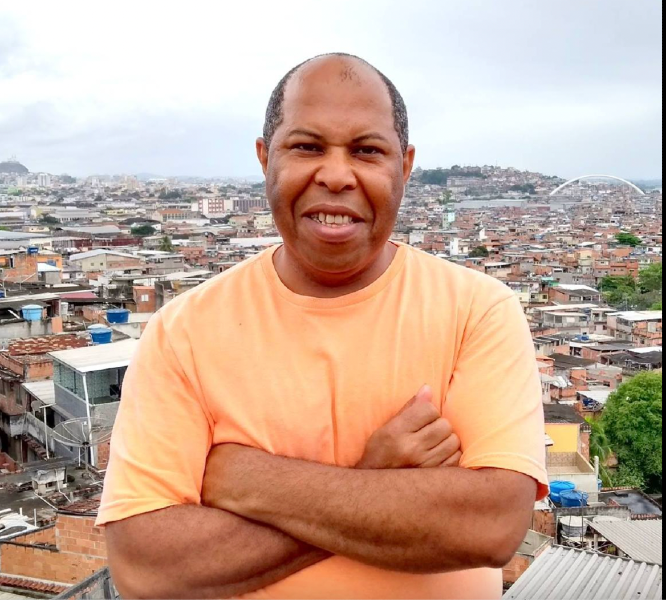
My friend Lourenço Cezar is a 55-year-old Afro-Brazilian geography and history teacher. He was a good friend of Marielle Franco and says part of the reason why authorities thought they could get away with Marielle Franco’s assassination was that, for so many years, they had gotten away with killing so many others.
Lourenço, who regularly teaches about the US civil rights movement, says that Brasil, which was under a dictatorship from 1964 to 1988, did not experience the same civil rights movement. As a result, he says that the movement isn’t as strong in challenging murders by the police. He points to the massacre last year where police killed 122 in one afternoon during a raid on the favela of Penha.
“Since deaths here in Brasil are more commonplace than in the United States, for example, given that we’ve just had a little over a hundred deaths in Penha, it seems difficult to find a symbol for (the) movement,” says Lourenço. “The United States manages to do this well. A single death there can come to represent an entire struggle. It feels as though we here are at an earlier stage of the movement. It feels as if we here are in the 1960s of the United States, while you are in the year 2026.”
Anielle Franco often cited her experience studying U.S. civil rights movements at HBCUs in the United States as inspiring her in the fight for justice for her sister. She says that studying at HBCUs increases her sense of Black pride.
“It’s very normal for Black people in the U.S. to be very proud of being Black; sometimes, we don’t have that in Brasil,” said Franco of her time studying at HBCUs. “I learned how to be proud of something my mom was always trying to teach us — proud to study and to be a Black girl from the favela.”
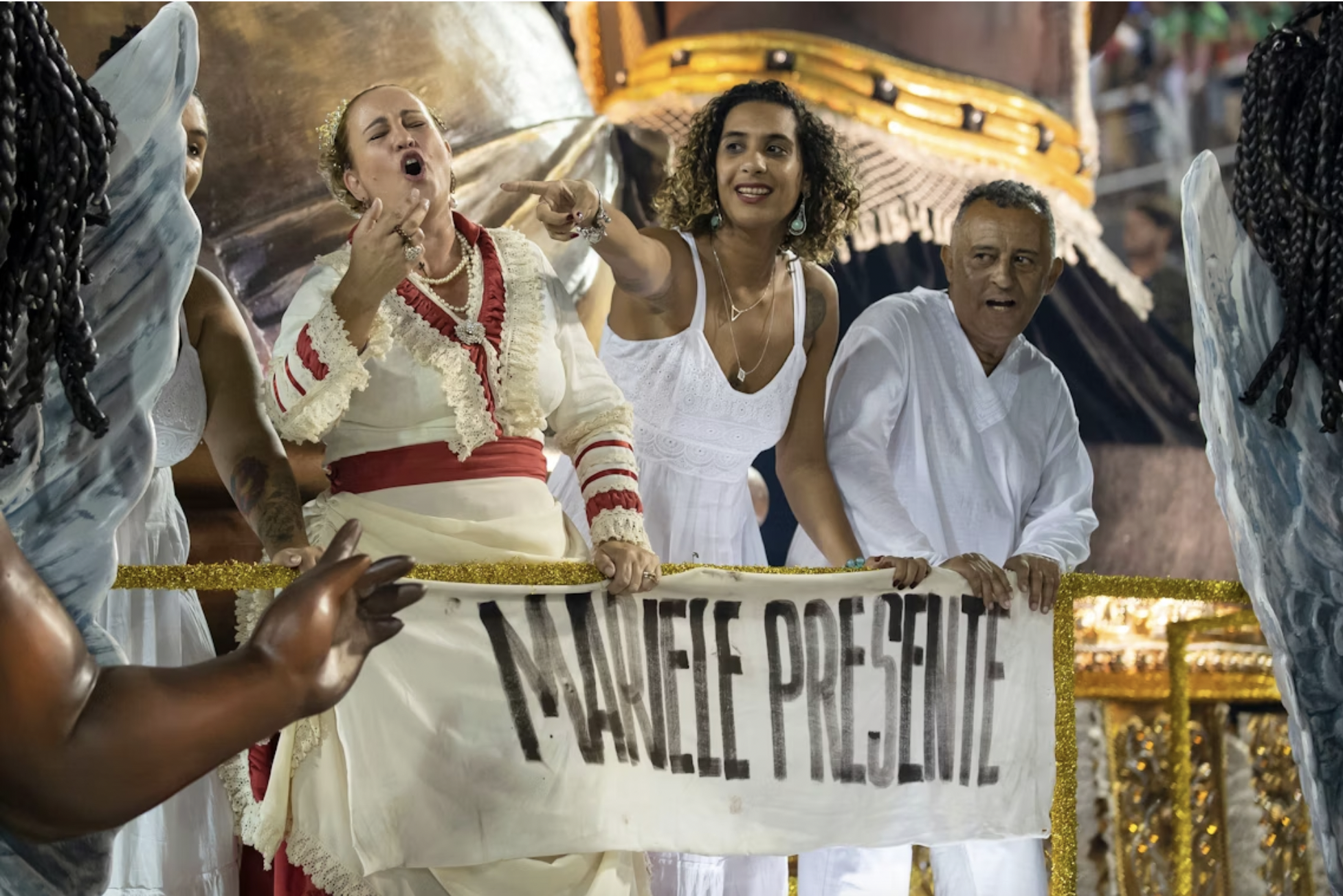
For decades, the solidarity between both Afro-Brazilians and African Americans has been strong.
Cultural exchanges between African Americans and Afro-Brazilians have been ongoing for decades. In the 1920s, W.E.B Dubois even traveled to Brasil to study the country.
During the dictatorship that lasted from 1964 to 1988, there was little talk of the civil rights movement because it was suppressed. However, after the fall of the dictatorship in 1988, there was another peak in African Americans visiting the country. Scholars like Angela Davis began to visit regularly, and dialogue between the two countries increased dramatically.
Afro-Brazilians say that the relationship between the two countries has inspired them and changed how race is viewed in their own country.
Race in Brasil is defined differently than in the United States, where there were strict laws against interracial marriage for many years. In Brasil, there is far more intermixing between races than in the United States. For years, many in Brasil have pointed to this intermixing as a sign of racial progress. However, activists like Lourenço say that the myth of racial mixing is setting back movements for Black power within Brasil.
Growing up mixed-race in Rio, Lourenço, who would be considered “Black” in the United States by his complexion, did not see himself as “Black.” Rather, he defined himself as “pardo,” a Brazilian term for mixed race.
“When I was a child, I hated being Black. I hated it. I used to tell people that I was ‘pardo.’Because on my birth certificate, I am listed as ‘pardo.’ When I was born, my skin was much lighter. My family is very mixed,” says Lourenço.
However, as he began to identify as Black, his political militancy increased as he studied Black diaspora movements around the world, including in the United States.
“The United States has such a strong history of leaders of civil rights, people that even Brazilians look to for inspiration,” says Lourenço.
In part due to the warm embrace many Brazilians have for African Americans, afrotourism has increased dramatically in Brazil over the last decade, particularly as social media makes it easier for Black people in both countries to interact with one another’s cultures.
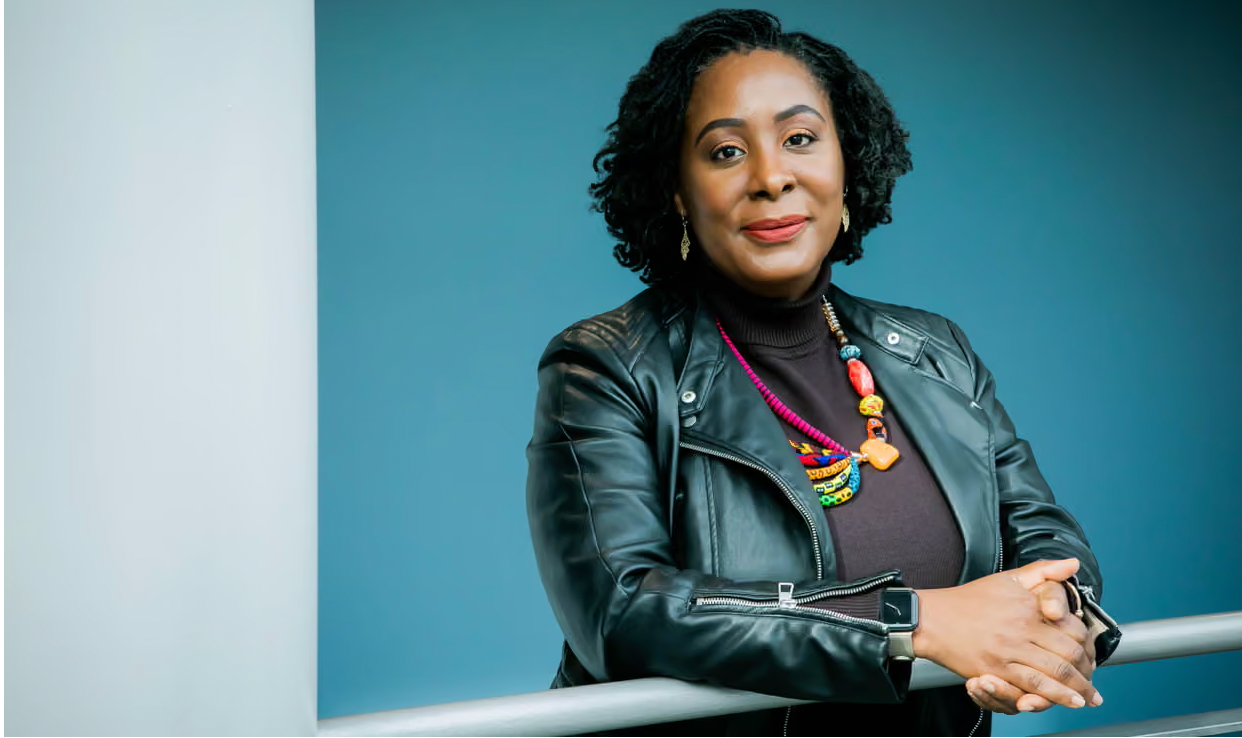
Carnegie Mellon University Professor Dr. Uju Anya is Nigerian-Trindianian-American and studies cultural exchanges between African Americans and Afro-Brazilians. She is the author of the book Racialized Identities in Second Language Learning: Speaking Blackness in Brazil.
“The biggest finding in my book was just how comfortable and happy [African Americans] felt in Brasil,’ says Anya. “African Americans go there, and they feel very comfortable because everybody kind of looks like them.”
In contrast, many African Americans say that they feel less welcome in places like Europe.
“In going to Europe, African Americans stand out a lot more, which kind of exposes them to mistreatment in ways that they don't in Brasil,” says Dr. Anya.
Anya credits the rise of special study abroad programs and Afrotourism programs aimed at attracting African Americans to Brasil. However, she says that Black culture in both countries has begun interacting more because of social media.
“Within the past maybe 15 years, or 10 years, it’s a massive change to see so many Black women in Brasil wearing natural hair. That was also something that came out of natural hair movements that were burgeoning in the US,” says Dr. Anya. “So what was happening online and (on) social media and YouTube. producing a lot of tutorials on how to care for natural hair and styles, and women in Brasil were studying them.”
Now, when she travels to Brasil, she finds that Black Brazilian women are asking her about how she maintains her hair.
“They want to ask you about hair. What hair products do you use? What are this, this, and that?” says Dr. Anya. “And because of (the) sort of the cultural hegemony, right, that Hollywood has, around the world, and especially in the Americas, African Americans, among Black people in the diaspora, are looked upon as the cool ones, but also as what they are in terms of leaders and taste makers, in fashion, in hair, in music.”
In the suburbs of Rio de Janeiro, Black communities often hold “baile charme,” where Brazilians practice forms of African American line dancing. In the United States, you can sometimes find DJs playing Brazilian “baile funk” as cultural exchanges between the two countries increase.
Many African Americans find Brazil’s connection to African culture, including the practice of Afro-Brazilian religions like Candomblé and Umbanda. Many also enjoy visiting Quilombos, historic villages founded by escaped slaves that were sites of resistance against white supremacy.
“Nearly every African-American I know who visits Brasil walks away fascinated by what they learn,” says Dr. Anya. “Brasil is an experience that every Black person on the planet should have.”
