
By Mike Elk
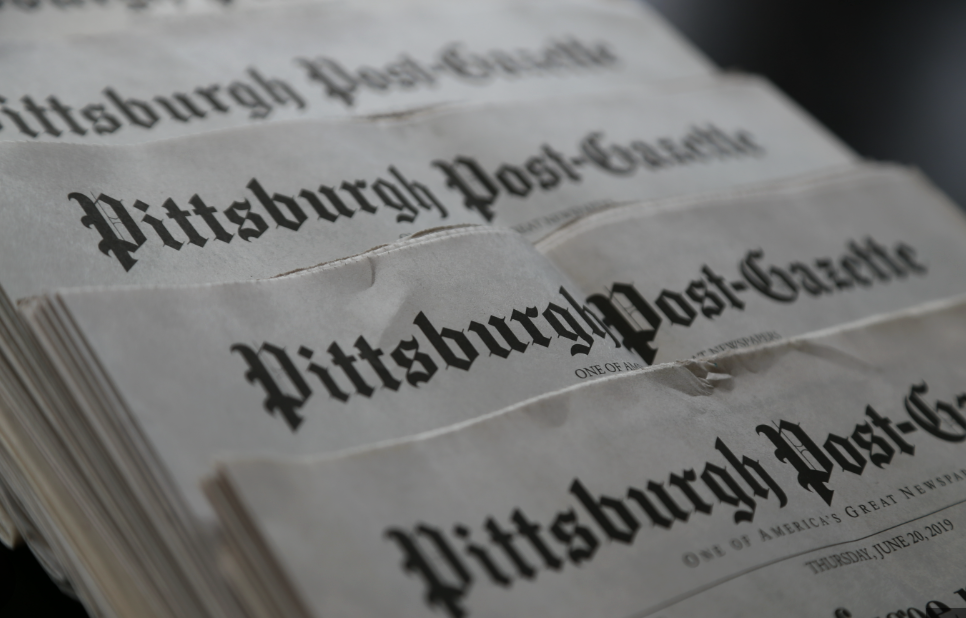
PITTSBURGH, PA - With the Pittsburgh Post-Gazette closing, there has been a lot of talk of creating a worker-run newspaper. Clearly, the city that played a key role in founding the labor movement deserves a worker-owned newspaper, but it can’t be run by the same clique of very white, boring journalists who’ve run the media world in this town for decades.
Yesterday, Allegheny County Executive Sara Innamorato talked about providing public support for the local news ecosystem. There clearly needs to be a system that allows a variety of local news outlets to apply for grants awarded to a diverse group of folks.
There are lots of great projects in this city that could vitally use that support, but for now, the conversation seems to be focused on one publication: reviving the Pittsburgh Union Progress, the strike newspaper set up during the three-year-long strike at the Pittsburgh Post-Gazette.
Pittsburgh Union Progress, while a good concept, did not feature a single Black reporter and was run heavily by white reporters and editors, some of whom had spent years writing racist and sensationalist crime stories.
Not much discussion has focused on funding Black outlets like the New Pittsburgh Courier, 1Hood Media, or the various fledgling efforts to launch Latino outlets in this city.
The Pittsburgh Union Progress was a 100% white publication. Not a single one of the 18 reporters who wrote for them was a person of color, according to their masthead published on their website.
For decades, Pittsburgh has been one of the most notoriously racist media markets in the country, as documented in the 2019 Columbia Journalism Review study: “The Pittsburgh Problem: Race, Media, and Everyday Life in the Steel City” by Dr. Letrell Crittenden.
The lack of diversity showed in the Pittsburgh Union Progress’s coverage of the Pittsburgh Mayor’s race. Pittsburgh’s first Black Mayor, Ed Gainey, was defeated by a vicious race-baiting campaign by Corey O’Connor, the son of a former Mayor. O’Connor repeatedly claimed that crime had gone up under Gainey when federal statistics showed that crime had actually gone down, as well as facing other accusations of engaging in “race baiting.”
Many in the African-American community, including 1Hood Media and the New Pittsburgh Courier, called out these tactics as “race baiting. Even more traditional outlets like Pittsburgh’s local NPR affiliate, WESA, and even the cross-state rival, the Philadelphia Inquirer, as well as my own publication, Payday Report, featured people calling out the “race-baiting.
Despite many other media outlets calling out the clear “race baiting, at no point did the Pittsburgh Union Progress mention these accusations of race baiting.
Likewise, the Pittsburgh Union Progress made no mention of a major sexual misconduct cover-up scandal within the union’s leadership that hurt the union's ability to get reporters to respect their picket line. This, despite the fact that major national outlets like the New York Times, Semafor, and the US Press Freedom Tracker reported on the cover-up of sexual misconduct in the union’s leadership and attempts to retaliate against whistleblowers.
At one point, the Pittsburgh NewsGuild, while in the midst of a costly strike, even attempted to subpoena the names of sources that cooperated with a New York Times investigation.
While I feel deeply for the good rank-and-file journalists in that project, who are losing their jobs at the Pittsburgh Post-Gazette and hope they all get jobs, the Pittsburgh Union Progress failed repeatedly on racial justice, particularly by not publishing a single byline by a person of color.
Pittsburgh, though, has many diverse media projects that have shown a willingness to rock the power structure of this town.
If local governments were to start giving out grants, the publication at the top of the list should be the New Pittsburgh Courier. For decades, The Courier has been an essential voice of the Black community, not just in Pittsburgh but nationally. For decades, it was the most widely circulated Black publication in the country.
Like many print publications, the Courier has fallen on hard times, but still somehow manages to put out a weekly paper. If any publication were to receive local government money, the Courier should be at the top of the list.
1Hood Media has also done some amazing and hard-hitting work challenging the power structure through a variety of new media platforms. Both 1Hood and the Courier weren’t afraid to call out the “race baiting” in last year’s ugly, racially charged Mayor’s race.
There are also a variety of efforts underway to start a full-time Spanish publication in Pittsburgh, but these publications have struggled due to a lack of support.
However, I fear that since some of these media projects have been extremely critical of Pittsburgh’s new white Mayor Corey O’Connor, they won’t be at the top of the list receiving government support. In Pittsburgh, as with the last Mayor’s race, the white power structures of this city always have a way of staying in power.
If the local government chooses to fund and assist local media projects, I hope they're diverse and willing to challenge power structures. If not, I fear that any publication that challenges the power structure will not survive in an era when readers, who are essential to crowdfunded projects, demand hard-hitting reporting.
If we are going to build a new media institution in Pittsburgh, let's not replicate the same old white media institutions that enabled racism in this city for so many decades. Let's build a truly diverse and inclusive media system because ultimately that's what readers, who will be needed to back any publication, deserve.
