
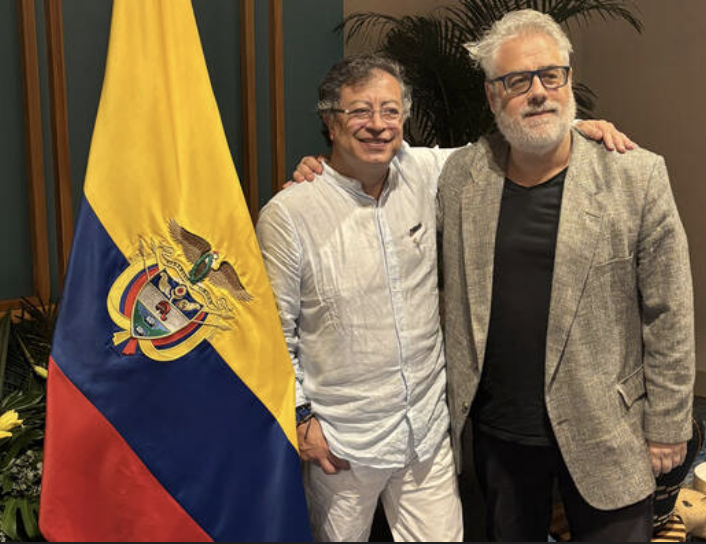
PITTSBURGH, PA - As a neighbor of Venezuela, Colombia’s President Gustavo Petro has played a major role in pushing back against the Trump Administration’s attack on Venezuela.
In retaliation for Petro’s advocacy against Trump, the Colombian President was placed on the U.S. Department of the Treasury’s Office of Foreign Assets Control (OFAC) sanctions list. The Trump Administration has accused Petro of drug smuggling, but has yet to put up any evidence backing it up.
Being on the list led to several of Petro’s bank accounts being frozen. It's even led foreign companies to stop doing business with the Colombian government due to fear of sanctions from the Trump Administration.
“What happens is, even non-US companies, non-US banks will honor the OFAC list because they don't want to get in trouble and then themselves be sanctioned,” said Dan Kovalik, a Pittsburgh labor lawyer, who is representing Petro in the United States. “So, for example, the Petros’ bank accounts in Colombia have been frozen. Even though they're Colombian banks, they're not US banks, but the Colombian banks don't want to get into trouble with the US, so they over-comply.”
For many, it may seem strange that the president of Colombia is represented by a Pittsburgh labor lawyer. However, Kovalik and Petro first met nearly 20 years ago, when Kovalik worked as an attorney for the Steelworkers union. At the time, the Steelworkers were working on international solidarity efforts to draw attention to the assassination of union leaders employed by Coca-Cola in Colombia.
Since Petro was added to the OFAC list in October, Kovalik has made several trips to Colombia to coordinate Petro’s defense against being added to the list.
“In early November, I saw him in Santa Marta. I actually just got back from Cartagena. I got three hours with him, just me, him and his son,“ Kovalik told Payday Report.
Since then, Petro has asked Kovalik to get involved in representing the family of Alejandro Andres Carranza Medina, a Colombian fisherman who was killed in Trump’s attack on his boat in September. Kovalik has filed a landmark case with the Inter-American Commission on Human Rights, a body of the Organization of American States.
For Kovalick, participating in both local labor struggles in Pittsburgh and international solidarity in Latin America is a key part of his identity as an activist.
“I've always been drawn to Latin America. I've always seen it as a real battleground of the left, against the right and against US imperialism,” says Kovalik. “It has suffered so much from us, imperialism, of course, and what you see happening, for example, with these bombings of the boats, in which Trump has killed around 100 people in cold blood.”
More than that, Kovalick often finds himself inspired by the courage he says he sees among activists in Latin America, who are often fighting against more difficult odds than Americans.
“I would just say that from a personal point of view, for me, it's been the most rewarding work I've ever done,” says Kovalik. “I get a lot out of international solidarity. You know, the love that you put out, you get returned, and more so, and then some.”
