
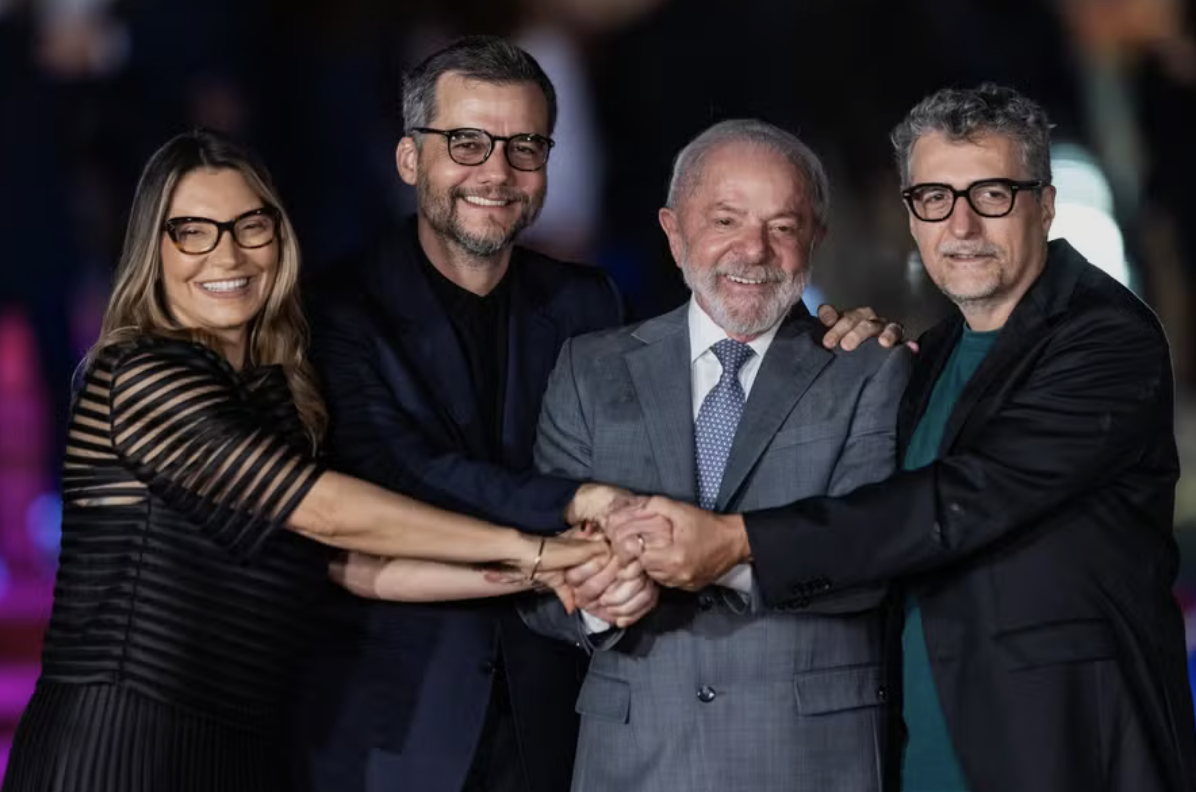
PITTSBURGH, PA -Last night, as the music rose to signal him to wrap up and exit the stage, Brazilian director Kleber Mendonça Filho, who had just won the Golden Globe for Best Foreign Film for the Brazilian political thriller The Secret Agent, kept on talking.
“I dedicated this film to young filmmakers. This is a very important moment,” Kleber declared as the music rose. “This is a very important time in the history of making films. Here in the US and in Brasil, young American filmmakers make films,” Kleber shouted as the music started to drown him out.
As a documentary filmmaker who has worked for 20 years in both the United States and Brasil, it meant a lot to me to hear Kleber’s words of encouragement. When I first discovered Kleber, I found his films so explosive, so unapologetic in their political takes, and so real in their simplicity and in their depiction of everyday solidarity.
As the music came up, Kleber was encouraging us to fight in solidarity with Brazilian filmmakers. It was quite a courageous move by Kleber to keep speaking about solidarity, even when CBS wanted him to stop.
Later in the night, Wagner Moura shocked the film world when he became the first Brazilian to win Golden Globe for Best Actor for his role as a professor on the run from gun thugs during the 1977 Brazilian dictatorship.
Kleber said he wrote the role specifically for Moura after the two became friends over their shared politics and opposition to the right-wing Bolsonaro administration.
“(The) Secret Agent is a film about memory or the lack of memory and generational trauma,” Moura told the Golden Globes.“I think, if trauma can be passed along to generations, values can too, so this is for the ones that are sticking to those values in difficult moments.”
Then, Moura spoke in Portuguese to thank all the Brazilians back home. “To everyone in Brasil, watching this now, long live Brazilian culture. Long live Brazilian culture!”
Later that evening,the official Instagram account of the federal government of Brasil posted Moura's entire speech in English, with Portuguese subtitles. For the Brazilian government, The Secret Agent winning Best Foreign Language Film and Moura becoming the first Brazilian to win the Golden Globe for Best Actor was something for the whole nation to celebrate.
Quickly, Lula, the autoworker union leader turned President of Brasil, posted on social media photos of him, his wife, and both Moura and Kleber celebrating their film. Under Lula, the Brazilian government has heavily invested in Brazilian cinema, including The Secret Agent.
“Long live Brazilian cinema, which continues to be synonymous with pride on the major stages of the world,” wrote Lula on Instagram, whose account had regularly promoted The Secret Agent during its cinematic launch.
“The Secret Agent is an essential movie to not forget the violence of the dictatorship and the resilience of the Brazilian people,“ wrote Lula.
In recent years, Lula’s investment in subsidizing anti-fascist Brazilian films has paid off in a big way, finding audiences in America and elsewhere overseas. Under Lula, the Brazilian government has invested hundreds of millions of dollars in tax incentives and subsidies in cinema alone. The foreign tour of "The Secret Agent" is being sponsored by Petrobras, the state owned-oil company of Brazil.
At a time when American democracy is in shambles, Americans are flocking in record numbers to see films about anti-fascist movements in Brasil.
While Trump is in his second term in office, Brasil just successfully prosecuted former Brazilian President Jair Bolsonaro and sentenced him to 27 years in prison for attempting to orchestrate a coup. The renewed attention to Brazilian anti-fascist films and Brasil’s political history has been warmly welcomed by Lula, whose stature has been enhanced by Brazilian box-office records being broken in American cinemas.
“As Wagner himself has put it, Brazilian cinema has been mobilizing attention and respect from people in all regions, and it has been an important symbol of the return of the appreciation of artists in our country,” Lula wrote in this third Instagram post of the day about The Secret Agents' wins at the Golden Globes.
Under Lula’s watch, Brazilian cinema, with public investment, has undergone a dramatic revival and achieved unprecedented success in American markets, changing Americans' perceptions of Brasil.
Last year, Fernanda Torres won the Golden Globe for Best Actress.
It began last year with the film I'm Still Here, the first Brazilian film to win an Oscar, becoming the highest-grossing Brazilian film of all time.
The movie, which won rave reviews, follows the disappearance of Brazilian Congressman Rubens Paiva during the dictatorship in 1970. The film focuses on the effect that his disappearance had on his wife and children. His wife, Eunice Paiva, spent 45 years searching for answers to what happened.
Fernanda Torres, who played Paiva's widow, became the first Brazilian woman to win a Golden Globe for Best Actress and was nominated for the Academy Award for Best Actress. Both the movie and the award provided an education to American activists who previously knew little about the Brazilian dictatorship.
Now, the film The Secret Agent, directed by the leftist Brazilian director Kleber Mendonça Filho, has taken American audiences by storm.
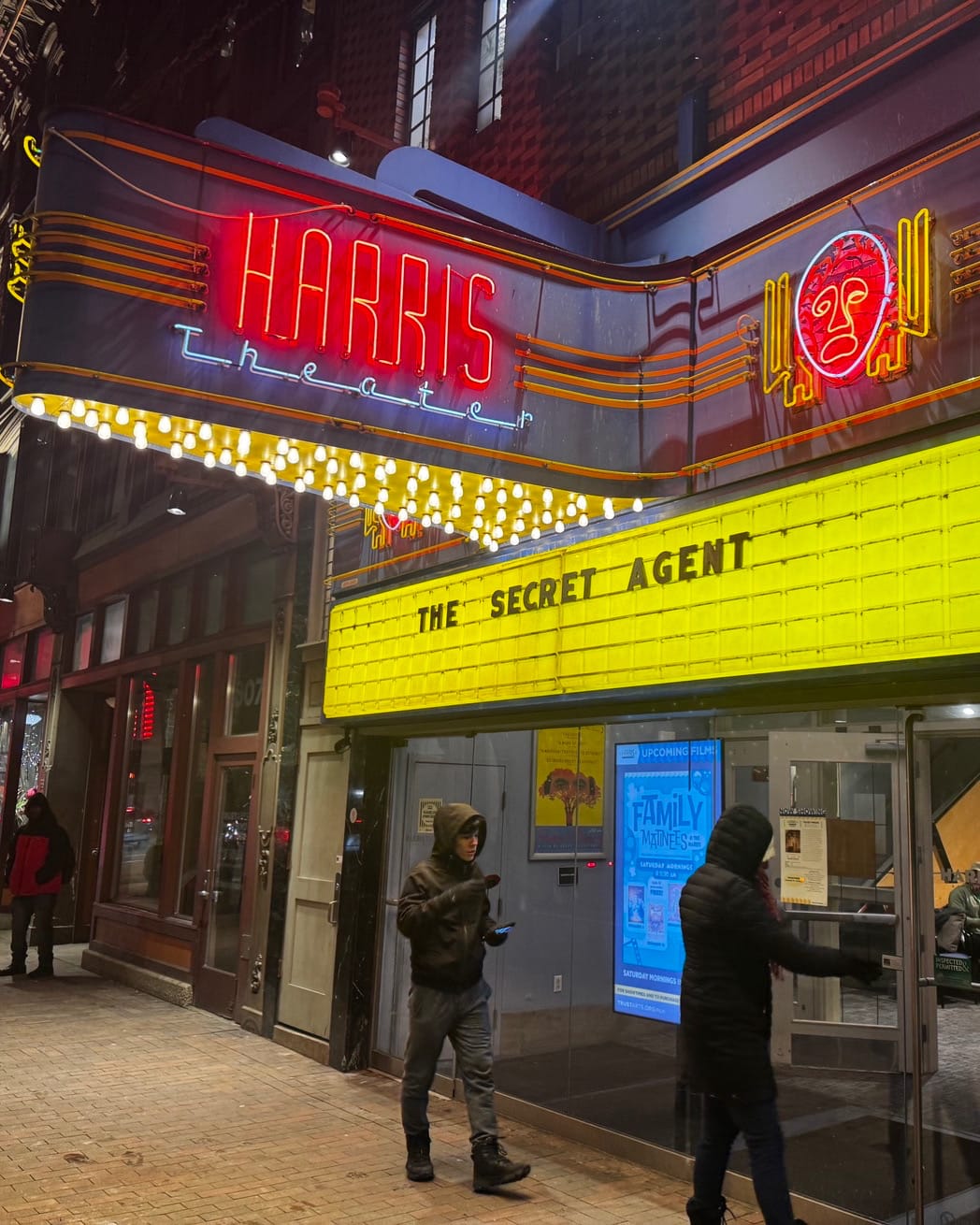
In Pittsburgh, Payday Report was proud to host the Pittsburgh Premiere of The Secret Agent at the historic nonprofit cinema, the Harris Theater, in conjunction with the Pittsburgh Cultural Trust. Given that it was a foreign film, we were worried about turnout, so we hosted a special opening night event featuring Brazilian food with a special Q & A afterwards featuring Robério Diógenes, the actor who played the police chief in The Secret Agent, and Flavia Guerra, a top Brazilian film critic and Golden Globe voter.
For weeks, we came up with a publicity campaign for the film’s opening, including distributing flyers and posters all over town. In one of the strangest moments of my life, I saw a poster for a surrealist Brazilian political thriller in McBroom’s beer store down in the neighborhood where I grew up in Pittsburgh.
Finally, when opening night came, there was a massive snowstorm, and the roads were so dangerous that one teenage girl was killed in an accident that evening. But even in the middle of a blizzard, 68 people showed up for the premiere of The Secret Agent, and then more kept coming to see the film.
Initially, the film was supposed to run for only two weeks at the Harris Theater. However, The Secret Agent sold so well in Pittsburgh that the theater extended its run by another week.
On Golden Globes night, I found myself at home with a beer in my hand, cheering and hoping for the film. As an American labor reporter who spent 20 years studying and working in Brasil, it was a beautiful moment to see a film about a Brazilian activist whose courage in fighting the dictatorship has inspired me in many ways.
After the Golden Globes, Kleber held a post-awards show press conference, where he spoke even more about the crucial need for links between cinema and political movements in both Brasil and the United States.
“About 10 years ago, Brasil took a very sharp turn to the right, and that time is now gone. The former president is now in jail… and I really think cinema can be a way of expressing some grievances we all have in terms of the kind of society that we live in.”
“I would particularly address young US filmmakers, and I know many, I’m still a [cinema] programmer, and I get to see a lot of work coming from the U.S., and I think there is a lot of technology to express yourself, and this is a very good time to express yourself. And I think young filmmakers in the US have a lot to say about what happens in this society.”
After watching Kleber talk at the awards, I called my friend Robério Diógenes, who played the police chief in 'The Secret Agent'. After he spoke at the Pittsburgh opening via Zoom from Fortaleza, we started becoming friends. Unlike the sinister police chief, who he played in the movie, Robério was actually a warm, friendly guy and we exchanged Christmas greetings and jokes.
When I reached him by phone late Sunday night, he was celebrating with some friends of the cast at a party at his house and everyone was screaming. The party sounded like it was raging, but he kept wanting to talk (really nice guy). I told him to tell Kleber thanks for his call in solidarity to encourage young American filmmakers on the left. Robério then invited me to come to Fortaleza to learn about groundbreaking solidarity economics projects.
Slowly, American and Brazilian filmmakers are building bonds together through films "The Secret Agent" and its something we so desperately need right now. Ss Kleber said Sunday night, cinema must fight fascism!"
