
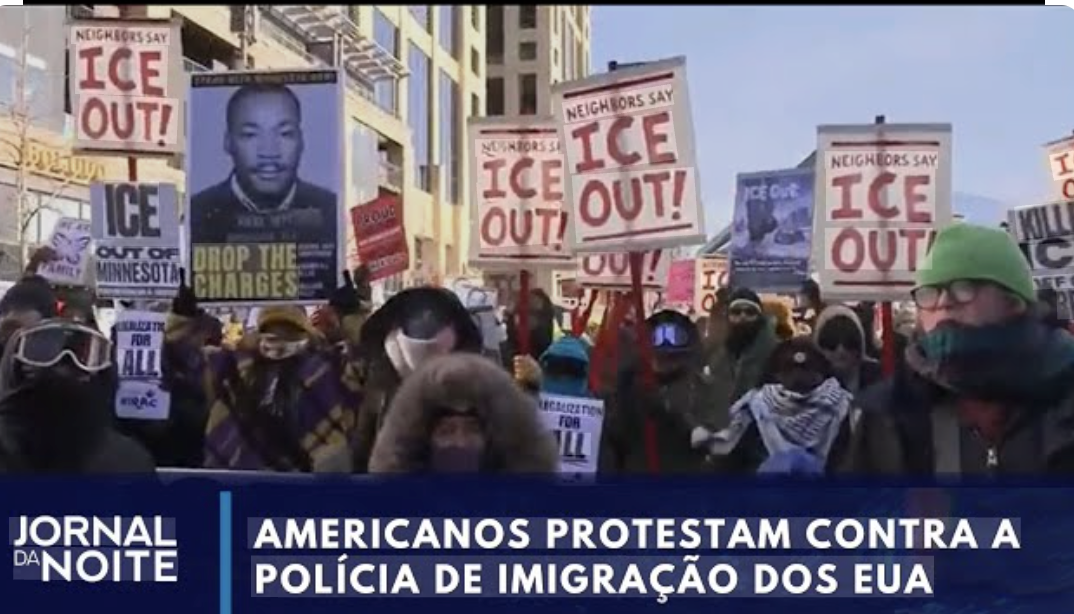
RIO DE JANEIRO, Brasil - Since arriving in Brasil a month ago, nearly everyone has been asking me about what ICE is doing in the United States. It’s not just intellectuals and activists, but also taxi drivers, waiters, and people I meet in dive bars when I tell them I’m American.
In Brasil, 63% of the population still watches the nightly news, and it's common for most bars to show the news. Nearly every night, segments are being shown about ICE abusing immigrants and attacking the American citizens trying to protect them.
“It’s just like the dictatorship here, they can just kill whoever they want,” said my Brazilian host father Claudio Roberto Castilho, who grew up during the dictatorship that ruled Brasil from 1964 to 1988 and hosted me as an exchange student at PUC-Rio twenty years ago.
For twenty years, I have traveled back and forth between my hometown, Pittsburgh, and Rio de Janeiro, which has become like a “home away from home" for me. My host father, Claudio, still allows me to stay in my old college bedroom rent-free when I go on regular reporting trips in Brasil.
Something about this trip, though, is very different from any of the trips I've taken before. Everywhere I go, Brazilians are asking me about ICE. One Brazilian even asked me at a party if it was true that Homeland Security Secretary Kristi Noem shot her dog. (I confirmed to them that, indeed, she actually shot her family dog.)
“Do you think there is going to be a civil war in the United States?” one taxi driver asked me in the days after news of the execution of Alex Pretti in Minneapolis played constantly on Brazilian TV.
For Brazilians, who grew up with American music and films, it's terrifying to watch what's happening in the country, especially since Brazil just sentenced in September, its former president Jair Bolsonaro for 27 years for attempting to assassinate Brazilian President Lula and overturn the 2022 presidential election results.
Brazilians and the American Dream
“People ask me about it all the time because I lived in the US before, so they ask me all sorts of questions on how it is,” says my friend Felipe Arrais, who works at a hotel in Copacabana.
For nearly ten years, from 2004 to 2014, Felipe lived as an undocumented immigrant and worked as a bartender in New York City, and lived on Long Island for many years. In his apartment, he still has a Yankees license plate with his last name, Arrais, on it.
“People ask me, like, ‘Oh, Felipe, is it safe now to go to the US. I'm a Brazilian. I want to go to the US, live, and work. Is it safe to go?” says Felipe. “I always advise, ‘no, I don't think it's safe.’”
Like many Brazilians, Felipe grew up loving American culture, particularly punk rock, and often boasts of having seen Fugazi play in Belo Horizonte, Brasil, in 1997.
“It was the best concert that I ever wanted to in my life,” says Felipe. Like many Brazilians, Felipe dreamed of coming to the US. He immigrated in 2004, staying "illegally" for more than a decade before deciding to move back to be close to family in Brasil.
While many Brazilians may still detest American politicians like Donald Trump and Kristi Noem, most Brazilians still love American movies, films, and even the NFL, which has started playing regular-season games in Brazil.
The mega TV network Globo even set aside special time to broadcast Bad Bunny's Super Bowl halftime show, where he won praise on Brazilian TV for calling out Trump's racism towards Latin Americans. (The Puerto Rican star just performed his first Brazilian show last week in São Paulo)
Indeed, many working-class Brazilians tell me that they still dream of moving to the United States someday to work for a few years and take advantage of economic and educational opportunities there.
“Brazilians always had a goal to live better, and a goal to live the American Dream, because we are taught right here, since, like, we're kids, the American Dream is the best thing we can do,” says Felipe. “You go to the U.S., you work, you get some money, you get paid well, and then you are able to afford to buy a house and live, things that are very hard here in Brasil to get.”
Brazilians Watching ICE Raids at Bars
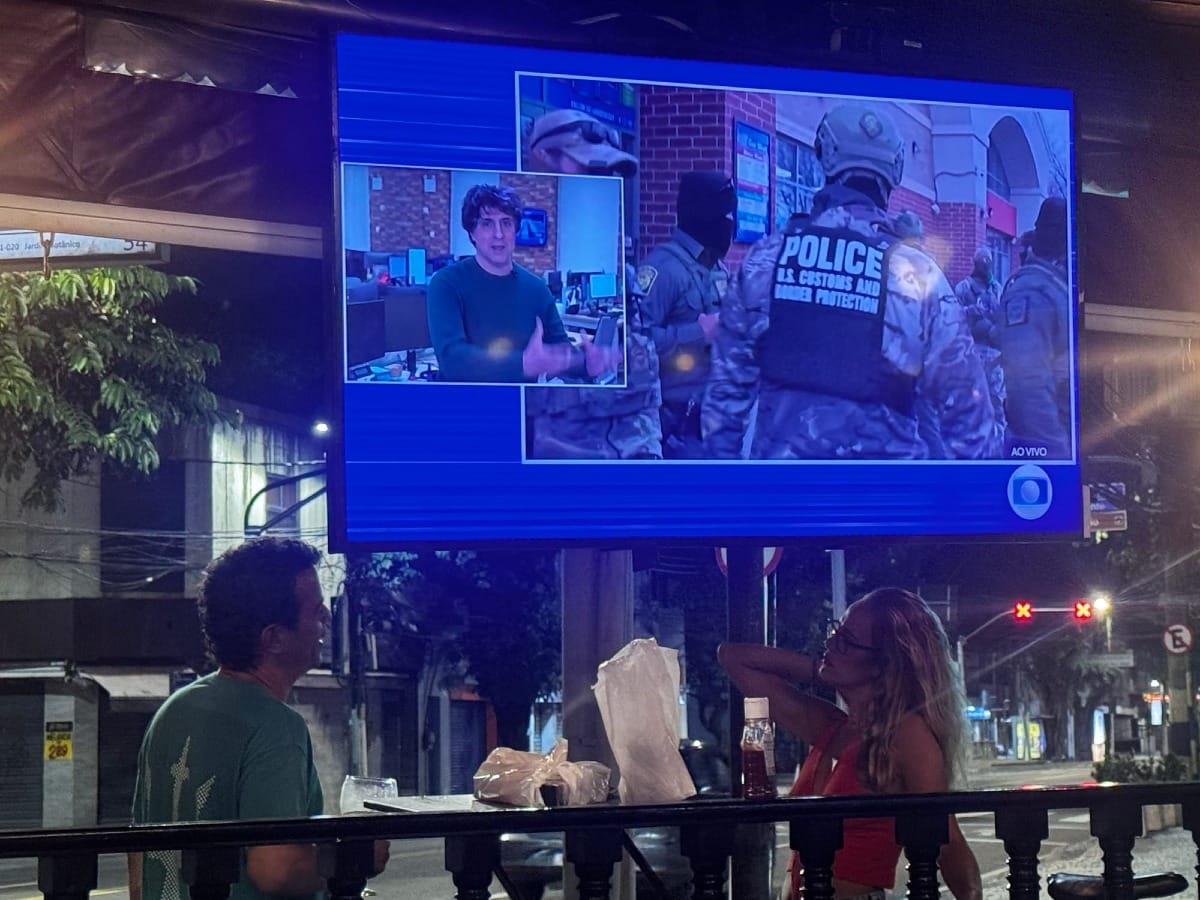
Currently, more than 2 million Brazilian immigrants live in the United States, and many more have traveled to the United States to study or work on short-term stints in the service industry on guest worker visas.
On a Sunday night, as I eat Brazilian chicken hearts on a stick from Denis Alves’ food truck Churrasquinho Guimarães, we watch the news of the release of 5-year-old Liam Conejo Ramos being released from custody after being used as bait by ICE to lure his parents into a trap. For Brazilians, who’ve thought about immigrants, these images of seeing immigrant children separated from their parents are unimaginable.
“Everyone knows someone who's living in the United States,” says Denis Alves, “All of us know people living in the United States, and it is scary to think that this could happen to our friends for just wanting to work.”
Indeed, the Trump Administration deported a record 2,268 Brazilians in 2025 alone. Some were shackled in handcuffs during the entirety of their 8-hour return flight to Brasil. The event forced Brazilian President Lula to denounce the inhumanity of the Trump Administration on a widely watched public broadcast.
“There are many Brazilians in the United States. Many of these people are imprisoned, and many of them don't want to return to Brasil because they want to continue working there,” said Lula. “But the American government doesn't want them to stay there. So, it's a matter of human rights."
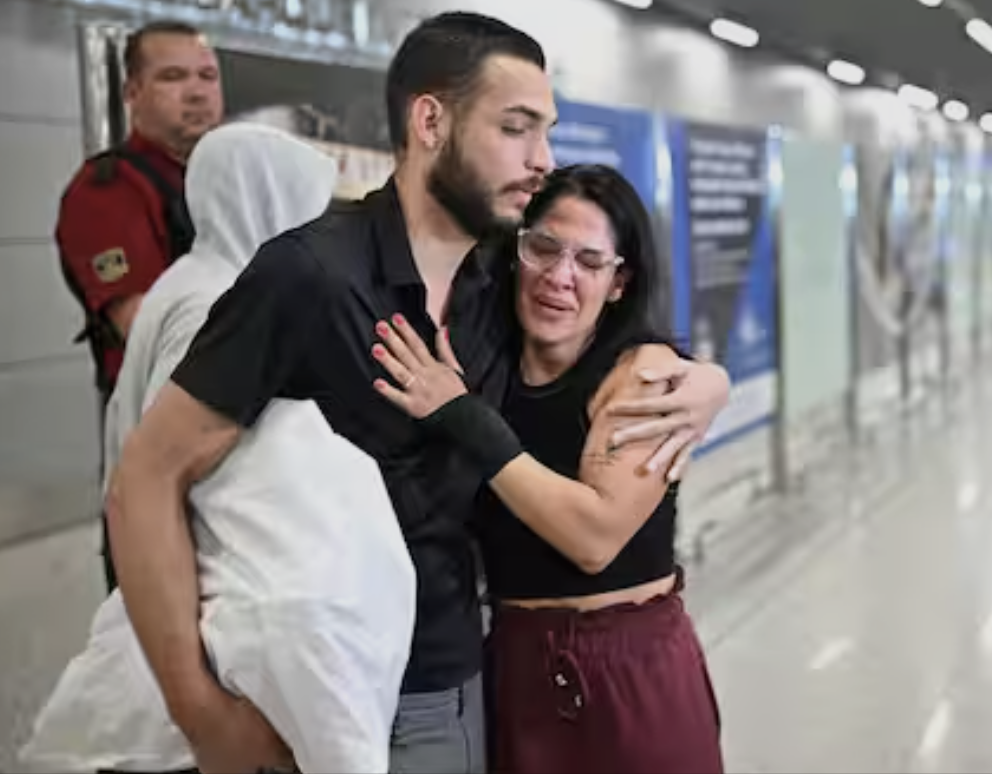
The stories of ICE abuses of immigrants in the US often go viral in Brasil, like that of 18-year-old Brazilian immigrant Marcelo Gomes da Silva, who received death threats after being targeted online by the Trump Administration.
On Tuesday, Congressman Seth Moulton (D-MA) invited Gomes to attend the State of the Union as his guest. Gomes’ case became an international story after he was detained and his small town of Milford, Mass., held mass rallies demanding his release. As a result of the protests, Gomes was released from ICE custody after a week in detention.
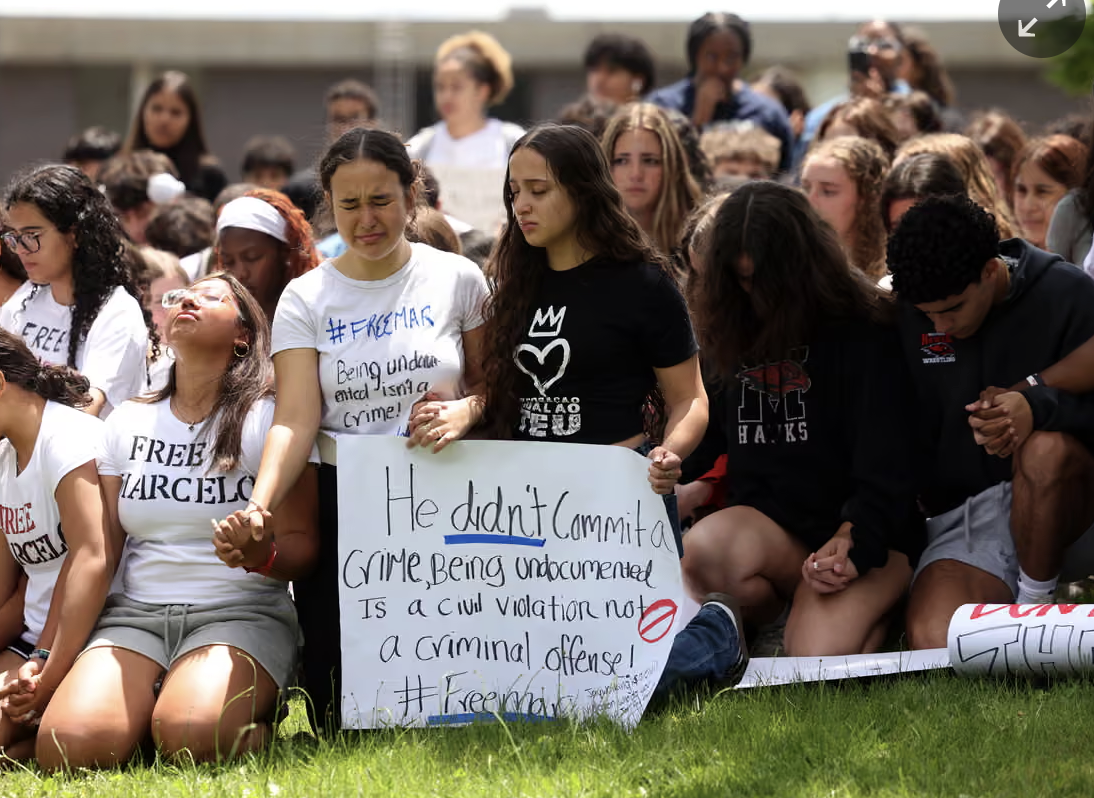
Moulton hoped that by inviting Gomes to the State of the Union, he would draw attention to how communities can successfully fight ICE detention. The Department of Homeland Security, though, had other ideas, denouncing Gomes by name on their Twitter feed.
“Today, some Democrats in Congress are planning to bring illegal aliens as guests to the State of the Union. Once again, they are putting illegal aliens above the safety of American citizens,” DHS officials wrote. “Gomes is an illegal alien who has no right to be in our nation. We are committed to enforcing the law and fighting for the arrest, detention, and removal of aliens like him.”
Aliya Rahman, a US Citizen, whose stories went viral after she was dragged out of her car by ICE, was invited to attend the State of the Union as a guest of Congresswoman Ilhan Omar, a Somali refugee who represents Minneapolis. However, Rahman was arrested by the Republican-controlled US Capitol Police during the speech, under the suspicion that she was trying to start a protest during Trump’s speech.
Fearful that Gomes, who is facing possible deportation, could be arrested again by ICE and potentially deported, Moulton removed Gomes from the chamber in the middle of Trump’s State of the Union.
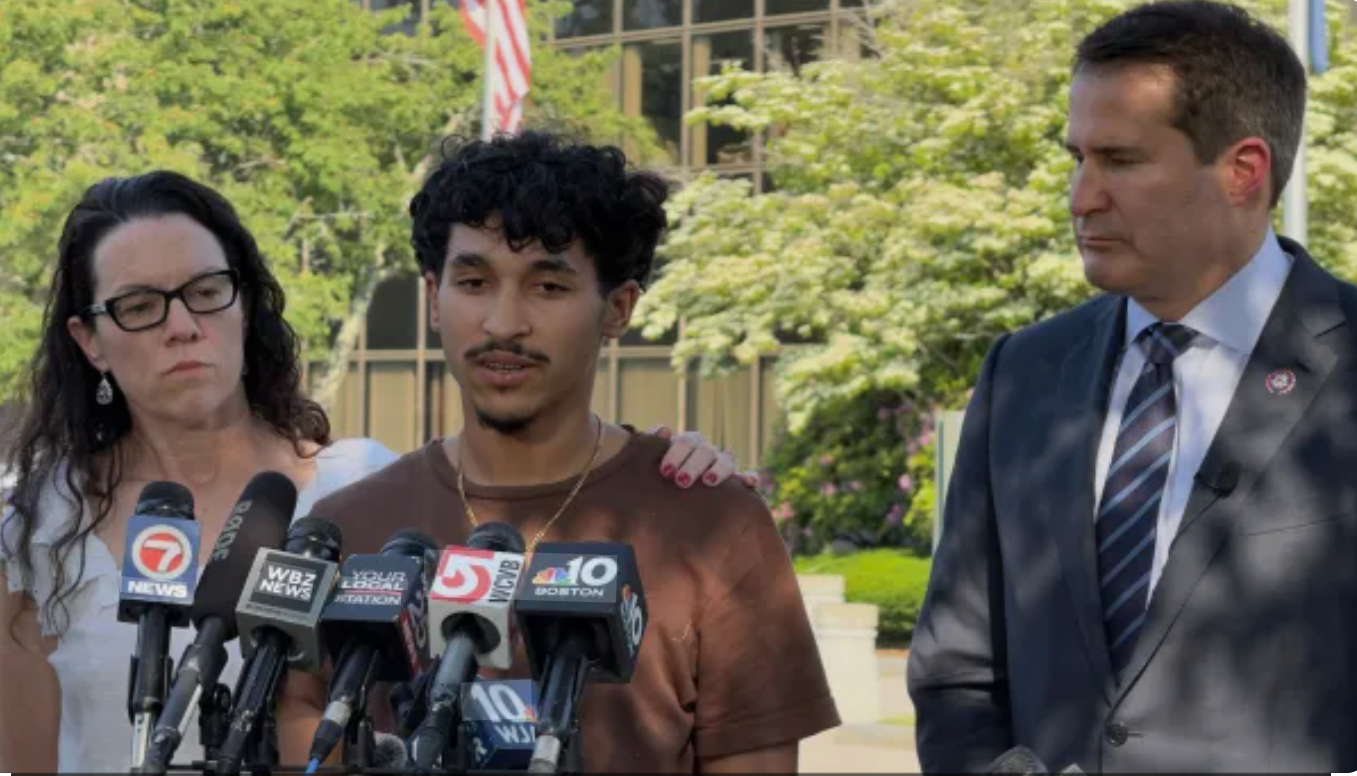
“None of this is fair. The way they stopped me, handcuffed me… none of this was fair,” Gomes told the leading Brazilian publication Revista Forum this week. “They put me in a state of great fear, and they are putting many people in a state of great fear. I'm glad that many communities in America are standing up to speak out against them.”
Indeed, many Brazilians know that some Americans are fighting back, and many have asked me about the killing of Alex Pretti. I have seen the video of his execution played more than a dozen times on Brazilian TV in the month that I have been here.
“His killing had a huge impact because here in Brasil, we have a lot of cases with police violence, the police going to the favelas and killing innocent people,” says my friend Felipe. In October, Brazilian military police, controlled by the right-wing governor of the state of Rio de Janeiro, killed 122 people in the Rio favela of Penha in an event denounced by the UN.
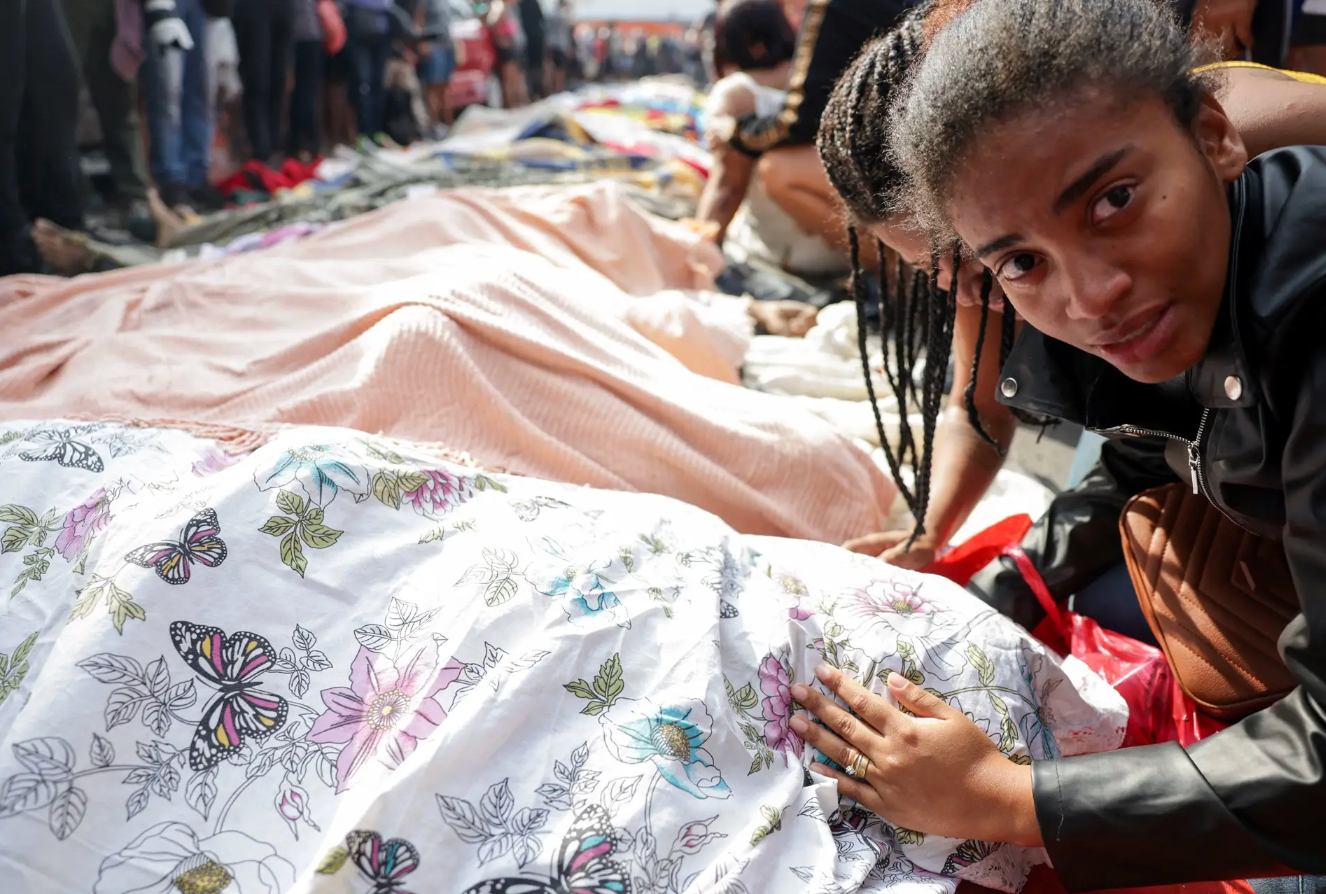
While the United States media largely ignored the story of the massacre of 122 in Penha in October, Brazilians watched the video of legal observer Alex Pretti being executed in streets of Minneapolis, played==ing over and over again on the nightly news.
“Here it happens a lot when the police go to the favela looking for drug dealers and then they end up killing, but for Brazilians, it's shocking to see this happen in the US,” says Felipe. “It is shocking because when they see the US, they see it as an American dream. I think they also think of being safe. Then when they see the US killing a nurse, it's kind of shocking. It's insane.”
However, Brazilian media outlets are also covering the story of Americans fighting back.
Pittsburgh Raises $100,000 for Brazilian Father Detained While 6-Year Old Daughter Receives Cancer Treatment
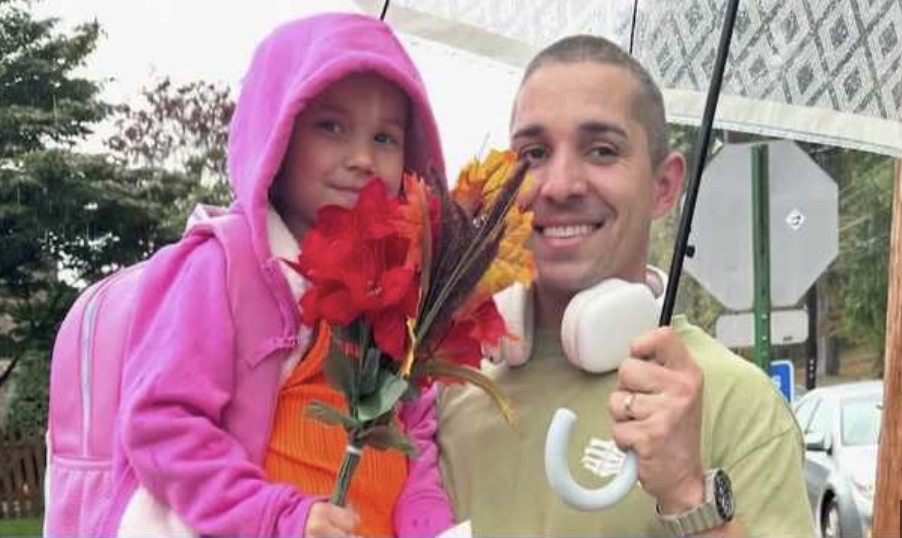
In Pittsburgh this week, Bruno Guedes da Silva, a Brazilian immigrant, was detained as he waited outside his daughter’s school, Osborne Elementary, in the suburb of Sewickley.
According to his Congressman, Chris Deluzio, Silva had a valid work visa, a Social Security number, and a driver’s license.
While Silva is detained at an ICE facility in Moundsville, West Virginia, his six-year-old daughter Maria is undergoing her second round of chemotherapy treatment.
Back home in Pittsburgh, the story of the Brazilian father’s detention has received massive media attention, resulting in $100,000 being crowdfunded to support her family through this difficult time. The 6-year-old Brazilian immigrant wrote a card thanking the many people in Pittsburgh who donated to help her, which went viral in local media.

The story also went viral in Brasil, with leading publications like Revista Forum covering it and citing local Pittsburgh publications. While Brazilian media is covering the fascist side of America, there still is a lot of attention paid to those Americans fighting against fascism.
Whenever I get back to Brasil, one of the first people I like to see is my friend Lourenço Cezar, a 55-year old Afro-Brazilian geography teacher and veteran activist of some tough fights. He grew up in the favela of Maré working alongside assassinated Rio de Janeiro city councilwoman Marielle Franco. He’s protested paramilitary violence and risked his life to tell stories of corruption and police abuse.
When we sat down for beers together, I pulled out a cheap whistle on a fluorescent string and gave it to him as a gift
“Oh yeah, I know what it is,” said Lourenço. “This is what you guys use to warn that ICE is coming. I’ve seen this on the news here.”
We spent nearly half an hour discussing how the rapid response networks are organizing to fight ICE.
“It's impressive, the level of organization," said Lourenço. “While it's really sad what's happening now, this level of organization could create lasting changes that could change the politics of the United States for years to come.”
While many Brazilians are horrified by what they see ICE doing on the nightly news, many of them still want to believe in the American Dream. They are inspired by seeing the many Americans who are dying and risking their lives to defend immigrants.
”Some of them like to see that the Americans are on the street protesting because a lot of people here would do the same. They’d go to the streets,” says my friend Felipe. “It is actually encouraging people to see what's happening in Minnesota because it's like ‘Oh man, yeah. They are really fighting back.’”
Felipe, a former undocumented immigrant in New York for more than a decade, has a message for Americans in the streets.
“Keep going. Don't give up, because the message you guys are giving, it's going worldwide, and that's great. This gives hope to people all over the world,” says Felipe, the one-time New Yorker. “A lot of people here in Brazil, they still wanna believe in the American Dream, so this is good.”
Translations from Portuguese done by Mike Elk in Rio de Janeiro, Brasil
