
I wanted to write and let everyone know that I have arrived safely in Rio de Janeiro, where the weather is exactly 90 degrees warmer than Pittsburgh. It’s been quite a shock to the system and threw me off for a few days. However, now I’m back to work and excited about what’s ahead. But first, I want to tell you a frightening experience.
After nearly 24 hours of flying and three connections (I’m a labor reporter, so I traveled super cheap), I finally arrived in Rio early last Thursday morning. All I wanted to do was go to bed, but when I arrived at Brazilian customs, my passport was flagged.
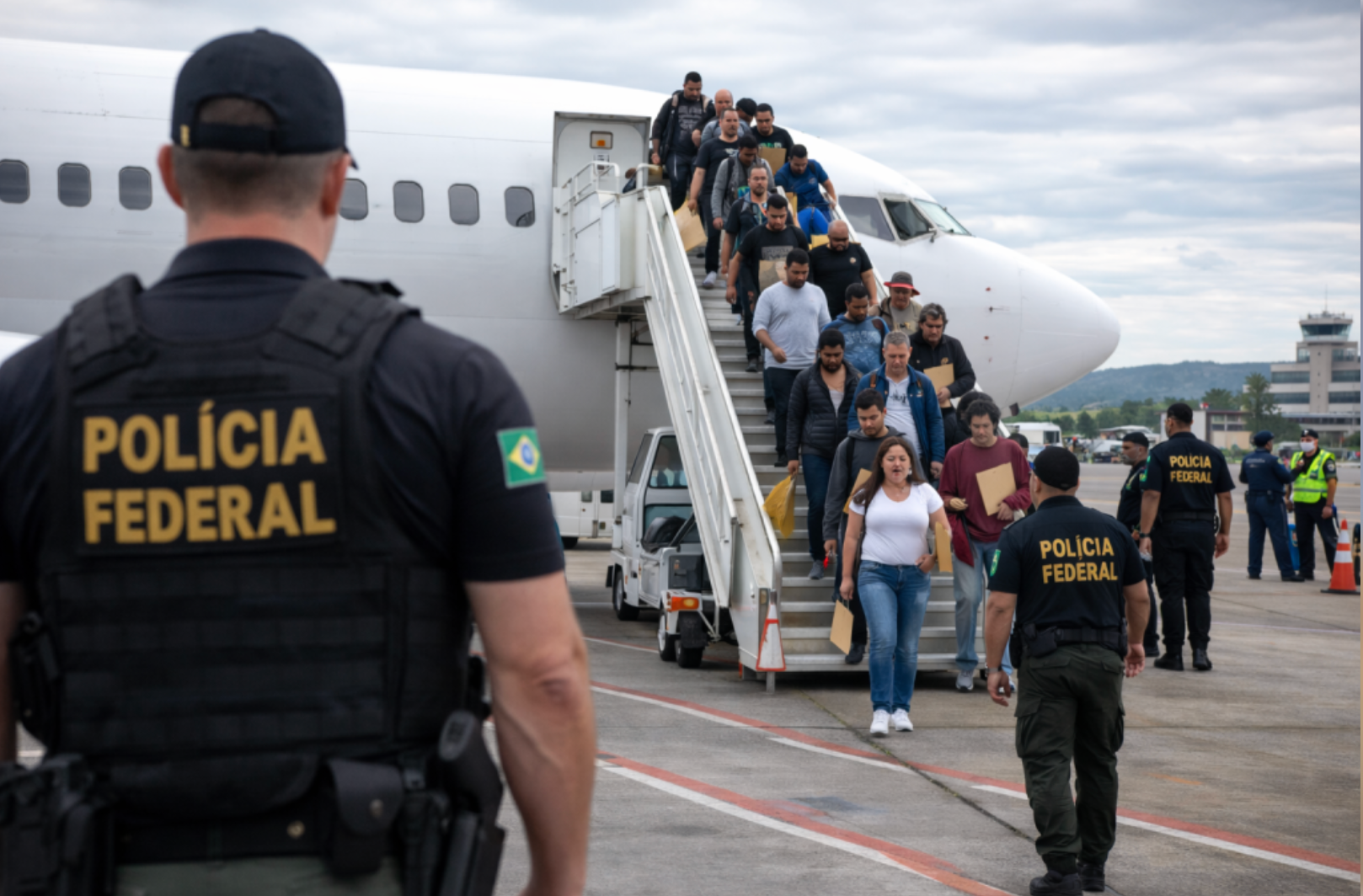
A customs agent led me to a room, where the Brazilian federal police told me to wait. I nervously began texting my journalist friends, worried that I might be sent back.
See, in 2024, when I was covering the assassination of Rio city councilwoman Marielle Franco, I misread the legal instructions for a visa and accidentally overstayed by about two weeks.
The visa instructions had said that I could stay for 6 months. However, I forgot to read the fine print that after three months, I needed to go to the federal police and register for another 3 months, so I had “illegally” stayed in Brazil.
As I sat in the Brazilian federal police office in Rio de Janeiro airport, I began texting my dad, terrified. Everyone knows that in Brasil, the police can do whatever they want to you, allegedly without repercussions.
Finally, after about an hour, a Brazilian federal police officer emerged and said, “Don’t worry, we're just gonna make you pay a fine for overstaying your visa.” My muscles tensed up as I waited for him to tell me how much… 132 reals, the officer told me, the equivalent of $27.
I breathed a sigh of relief and said, “Thank God.” The Brazilian federal police officer immediately started joking with me, “What do you think, we were gonna throw you in jail? We’re not ICE, we’re Brazilians.”
As I paid my fine and left the federal police office, I thought that if a Brazilian had done the same as I did in the United States, they would likely be thrown into painful prison conditions, perhaps even in solitary confinement for months at a time. But in Brasil, they welcome immigrants and tourists, so I was allowed to go on my way.
The Brazilian federal police officer wasn’t the only person to joke about ICE with me. Nearly everywhere I go in Brasil, though, people are asking me about the immigration situation in the United States. The other day, at a street-food vendor's cart, the owner was watching a video of 5-year-old Liam Ramos being released from ICE detention.
In a taxi, a few days later, the driver asked me whether I thought there would be a civil war in the United States.
When I went to meet my old university friend, Lourenco, a local activist, I gave him a whistle that I had gotten at an immigrant rights rally. When I took out the whistle, he knew exactly what it was - he’d been paying close attention to the news updates of how people in the United States were fighting back.
Many Brazilians love American culture, but are confused about why our country took a turn to a fascist state. When they see us fighting back on television, they are reminded that we are Americans and can be something big. I’ll have a longer story next week on how Brazilians are perceiving the immigration crisis in the United States.
In the coming weeks, I will have more stories about international solidarity, but I just wanted to let everyone know that I arrived safely. I will be filing dispatches from here in Brasil and will be providing regular updates on significant events.
Our community engagement editor, Amos Wolf, is still in Pittsburgh and will be filing regular dispatches on things happening in the United States. I will also be preparing a regular newsletter to keep our readers informed on happenings in the two countries.
To help cover the extra work Amos will be doing in the United States, please donate a few bucks. We have many exciting stories to tell in both the United States and Brasil. International solidarity is so crucial right now.
Support our mission
Donate Yearly
Donate Monthly
One-Time Donation
Patreon

Venmo