
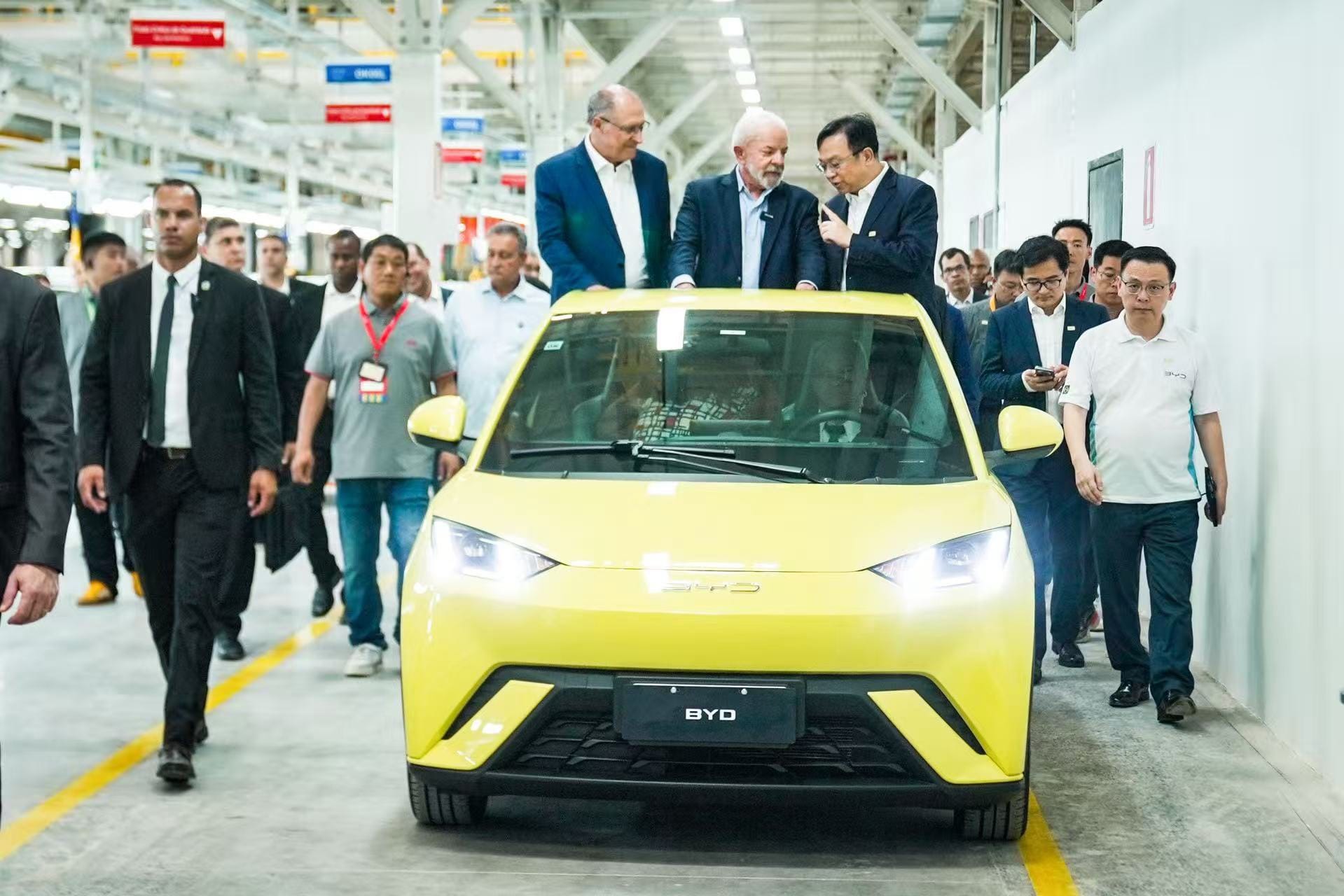
SÃO PAULO, BRASIL - Last week, the Brazilian government put BYD, the super hip Chinese electric car maker, on “the list of shame” for employing workers in “slave-like conditions” at their new electric car plant in Camaçari, Brasil. The news sparked legal appeals from BYD, whose brand reputation could be ruined by the ruling.
The news sent shockwaves throughout Brasil, where BDY’s slick new cars are a hot sensation on the streets as the best-selling electric car in the country, with 110,000 sold in 2025 alone.
It had been two years since I had been back reporting in Brasil, and I was blown away when I noticed this sleek car I had never seen before. At night, I would see BYD's continuous cord-like line of lights across the hood. The cord-like lights were mesmerizing and on the back of the car read the phrase “Build Your Dreams” (BYD).
Despite the English writing, these are not American cars but are from the Chinese automaker BYD, a car that the Trump Administration has prohibited from being sold in the United States. Seeing them was like living in a country where the Beatles were banned, and suddenly hearing the Beatles for the first time - I had never seen such a beautiful hatchback in my life.
I found myself noticing BYDs everywhere in Rio de Janeiro, a sign of shifting influence. The cars represented, to me, the decline of American influence and the rise of China’s in Brasil, the second-largest democracy in the Americas.
The replacement of GM and Ford products with Chinese BYDs signifies a broader shift as China replaces the United States as Brasil’s primary trading partner. At the same time, it means shifting from dealing with the Big Three, which dealt with the UAW in the U.S., to BYD, which has dealt only with weaker Chinese unions that lack independence and fall under the jurisdiction of the ruling Communist Party of China.
Now, more than 6,000 Brazilian workers are employed at the BYD plant in Camaçari, Bahia. For 20 years, the facility had been a Ford plant, but in 2021, Ford ended all production in Brasil, shifting to lower-cost workers in Argentina and elsewhere.
While GM and Volkswagen continued layoffs, BYD expanded and revived the struggling autotown of Camaçari, with support from President Lula, a former autoworkers' union leader, who touted China’s manufacturing investments.
“The BYD invasion here has been massive,” says Brazilian autoworkers union leader Miguel Torres of the 2.1 million-member-strong Força Sindical. “Great cars—dirt cheap—are being sold.”
Following a $1.1 billion expansion of the plant in Camaçari, the Chinese automaker intends to make 600,000 cars a year in Brasil, and export them to Mexico and Argentina, as well as other markets in Latin America.
The plant’s expansion was celebrated by many trade unionists as a landmark in Brasil's resistance to US imperialism, but feelings about BYD began to change very quickly.
In December of 2025, prosecutors found that 220 Chinese workers hired by BYD contractors in the Brazilian state of Bahia were working in "slavery-like conditions." Prosecutors said they were also victims of international human trafficking. Many of the workers had been recruited from the poorest regions of China to work building BYD’s plant in Brasil.
Brazilian Unions Find Less Support from Chinese Companies
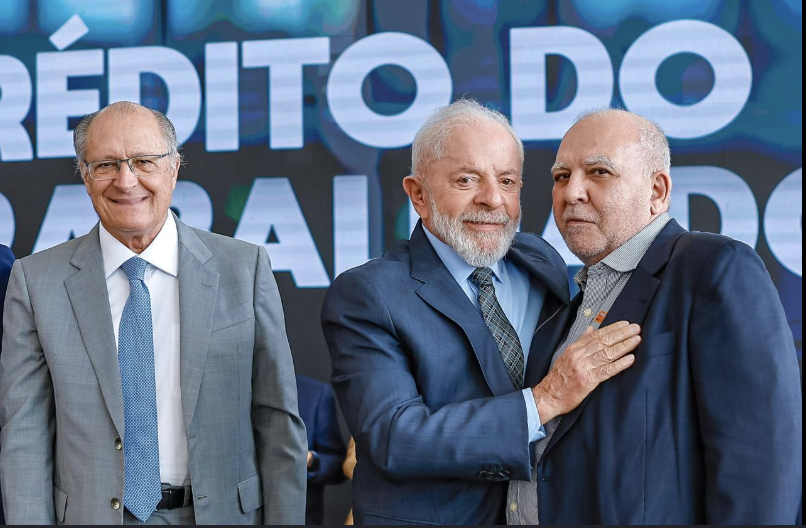
As Trump closes doors for American companies, and as economic relations between China and Brazil are expected to deepen, many Brazilian labor leaders are now finding themselves navigating a new international dynamic.
“We are not going to oppose the Brasil-China partnership. However, we must ensure that workers are respected under our laws,” says Miguel Torres. “We know that the cultural context is different, but workers are also raising the concern that they were not having access to the trade union movement.”
Brazilian trade unions have been regularly meeting with Chinese government officials, including the All-China Federation of Trade Unions, which is under the leadership of the ruling Communist Party of China.
Alongside American auto companies cutting back in Brasil, the United Auto Workers (UAW) has cut back as well.
“We used to have very close contact with the American labor movement, but things have cooled down significantly," says Miguel Torres, the president of the 2.1 million members of Força Sindical. Torres is a 70-year old veteran of the Brazilian autoworkers strikes in the 1970s and 1980s that brought down the dictatorship.
When Brazilian autoworkers were striking against the dictatorship, American unions like the UAW provided crucial support for strikers, fomenting a deep bond between Brazilian and American autoworkers, but in recent years that relationship has waned.
In 2022, the former UAW President Ray Curry cut the salary of a well-liked international organizing consultant, whom many union leaders credited with innovative cross-border organizing. The cuts came as the UAW faced internal belt-tightening following an embezzlement and bribery scandal that sent two former union presidents and a half-dozen top UAW officials to jail.
“In recent years. we’ve grown quite distant,”says Torres. “That changed after those [embezzlement] crises involving the UAW. So, currently, we don't have any official contact with the UAW.”
In 2025, Trump also cut funding entirely for the Solidarity Center, denying funds for important solidarity exchanges between American and Brazilian unions.
As American union and company presence recedes, union leaders in Brasil are adjusting their international solidarity strategies.
Last July, Trump imposed tariffs on Brasil in retaliation for a Supreme Court decision that jailed former President Bolsonaro for attempting to overthrow the 2020 election results. The tariffs had little effect since less than 1.2% of Brasil’s trade is with the U.S., compared to 28% with China.
With BRICS expanding to include a dozen countries, over 55% of the world's population is now represented within the bloc. BRICS bypasses the US dollar, making China-Brasil trade more lucrative and reducing U.S. financial influence.
“BRICS gave a tremendous amount of muscle—not only to Brasil and China, but to all these countries. It is another system to push back against power in the Global North,” says Miguel Torres
Traditionally, the Brazilian Workers’ Party, founded by President Lula in 1980, had a rather warm relationship with the Communist Party of China. The Communist Party of China, along with other communist parties, supported Brazilian efforts to overthrow the US-backed dictatorship that ruled Brasil from 1964 to 1988.
After winning back the Brazilian presidency in 2022, when President Lula went on his first state visit to China of his new term in 2023, Chinese Premier Xi Jinping had the band welcome him with the classic 1970s Brazilian song “Um Novo Tempo” (A New Time), which denounced US imperialism in Latin America.
“I believe China deserves to be looked at with more affection and no prejudice, because China is the economic and technological innovation of the 21st century,” said Lula. “This is how we have to look at China, with great appreciation and affection. And this is how I believe China looks at Brasil.”
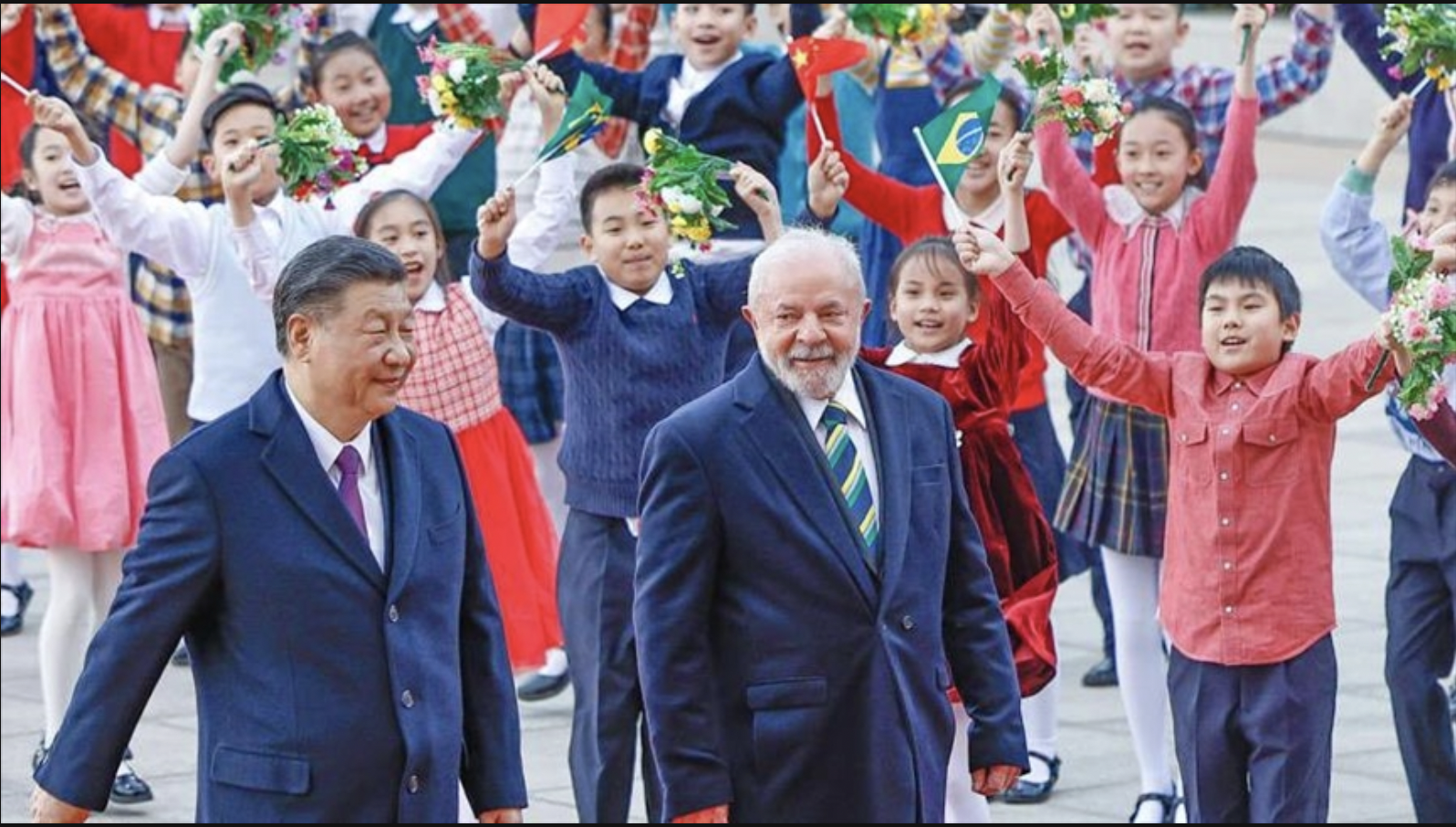
Those traditional ties between Lula, the Workers’ Party, and China have deepened further, as he seeks to establish BRICS, with heavy Chinese support, as an alternative to US domination of economic affairs in Latin America.
“We have a closer relationship with the Chinese Communist Party than we do with the Trump Administration,” says Maurio Ramos, executive counselor of Brazilian trade union federation UGT.
Slave-Like Conditions in BYD’s Brazilian Plant
However, with the influx of Chinese automakers comes concerns that they don't respect Brazilian laws or unions. In China, there are no independent trade unions, they are all under the All-China Federation of Trade Unions, which is led by the ruling Communist Party of China. Independent trade unions in China are banned by the state and often face severe repression.
Miguel Torres says that unions in Brasil have had some difficulty dealing with the Chinese on trade union issues.
“The majority of Chinese companies have not had contact with the Brazilian trade union movement,” says Torres.
In December of 2024, while plant expansion was underway, the Brazilian Ministry of Labor and Employment conducted a surprise inspection of the facility housing 163 Chinese workers who had been shipped to work at BYD. They found that workers lived in slave-like conditions on BYD’s factory grounds.
In one building, 31 workers slept on the floor without mattresses and shared only one overused toilet between them. The area around the toilet was coated in an “excess of sludge.” Without any refrigeration, workers were forced to keep their food on the ground, which often became infested with rodents.
The Brazilian Ministry of Labor and Employment found that BYD and two of its Chinese labor contractors, China Jinjiang Construction Brazil and Tecmonta Intelligent Equipment Brazil, engaged in “human trafficking” when they shipped the workers from China, forced them to work seven days a week, confiscated their passports, and forbade them from leaving the cramped buildings where they lived.
A further investigation by The Washington Post’s correspondent Terrence McCoy revealed that “On the job, they took risks that Brazilian workers said they could scarcely believe, braving dangerous heights without safety equipment, or working perilously close to heavy machinery.”
If workers threatened to return to China rather than work, BYD and its contractors threatened to withhold half of their pay, promising to give it only if they stayed until their contracts expired. On three occasions, workers told The Washington Post that they even saw BYD managers beating employees.
The Brazilian Ministry of Labor and Employment charged BYD with “slavery” and human trafficking, and concluded that living conditions were “a manifest affront to the principles of the dignity of human beings.”
At first, BYD tried to dismiss the investigations as American propaganda designed to hurt China-Brasil economic relations.
“We have seen firsthand how certain external forces have maliciously worked together and deliberately slandered us in an effort to smear Chinese brands, smear China, and sabotage China-Brasil friendship,” Li Yunfei, BYD’s public relations director, wrote in late 2024 on the Chinese social media platform Weibo. “I trust that everyone can see clearly what has happened.”
However, the Brazilian autoworkers didn’t buy BYD’s claims and instead went on strike against the employer last year.
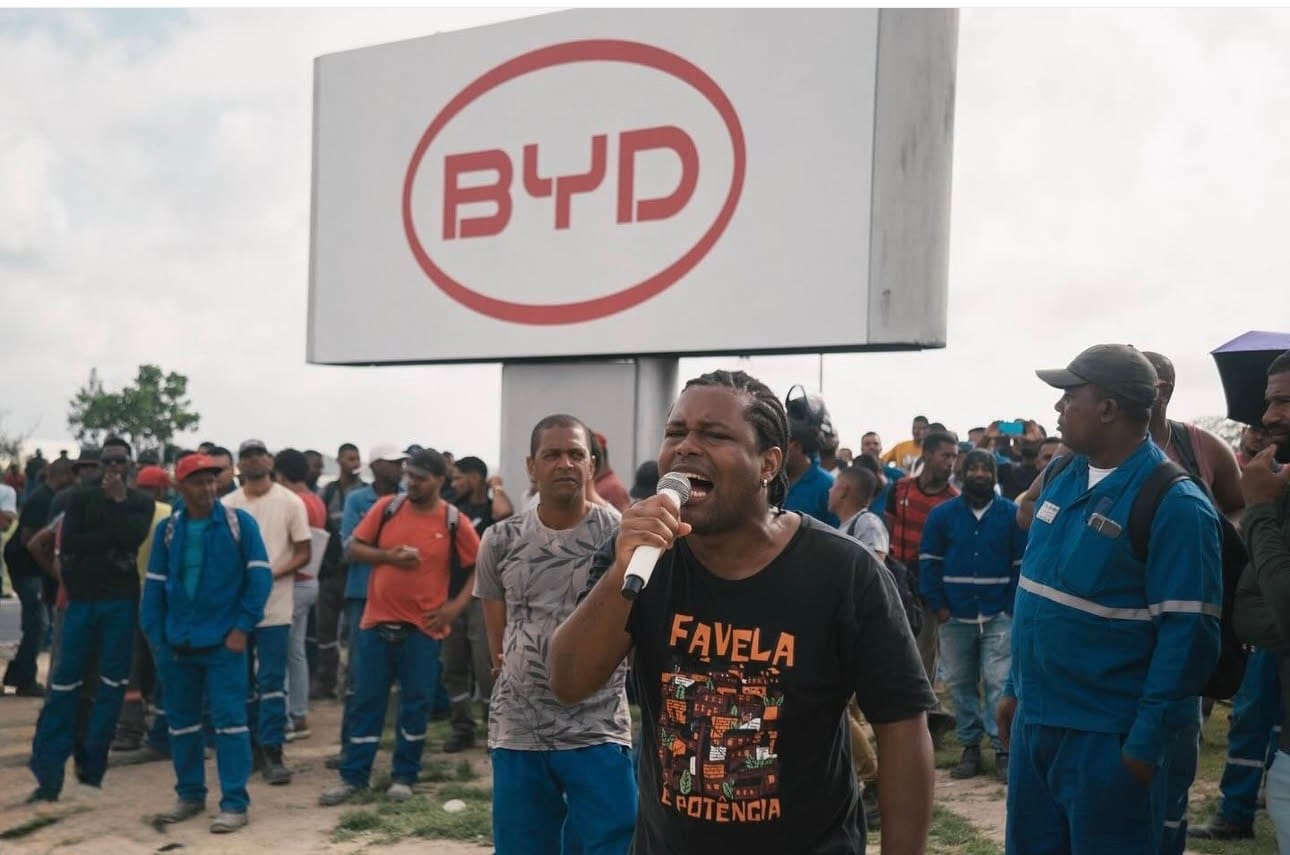
“If we don’t do something, nothing will get done. If we don’t build, they won’t go anywhere!” said construction worker Paulo Henrique Bispo during the strike. ”We want to work, to sweat, to build—because everyone here is fighting for a just cause and wants to return home with greater dignity.”
After the strike, BYD began to negotiate with Brazilian unions.
”The union stepped in, the BYD is now working with the union—they are listening. Things got started over in Bahia because there was a lot of action taken. They halted construction there at the time, I remember,” says Miguel Torres. “They started respecting the collective bargaining agreement.”
Eventually, Brazilian unions met with the Chinese Embassy in Brasilia and persuaded the Chinese automaker to implement changes.
”Last year, we had a very productive meeting with the Chinese ambassador there in Brasília,” says Miguel Torres. "We are not opposed to the Brasil-China partnership. However, we must ensure that workers are treated in accordance with our laws.”
A few months later, in October of 2025, BYD CEO Wang Chuanfu traveled to Camaçari, Brasil to appear alongside President Lula at the opening of the grand expansion of BYD’s plant that would make it the largest supplier of electric vehicles in the world.
As Lula took swings at Trump for imposing tariffs on Brasil for jailing Jair Bolsonaro for attempting a coup, Lula highlighted the arrival of the Chinese automaker and the departure of Ford, an American company, as signs of a new economic order.
“God is always right, even when it’s confusing at the moment,” joked Lula alongside Chuanfu. “Ford left us. But it meant that BYD has come.”
Brazilian Tireworkers Facing Layoffs From China
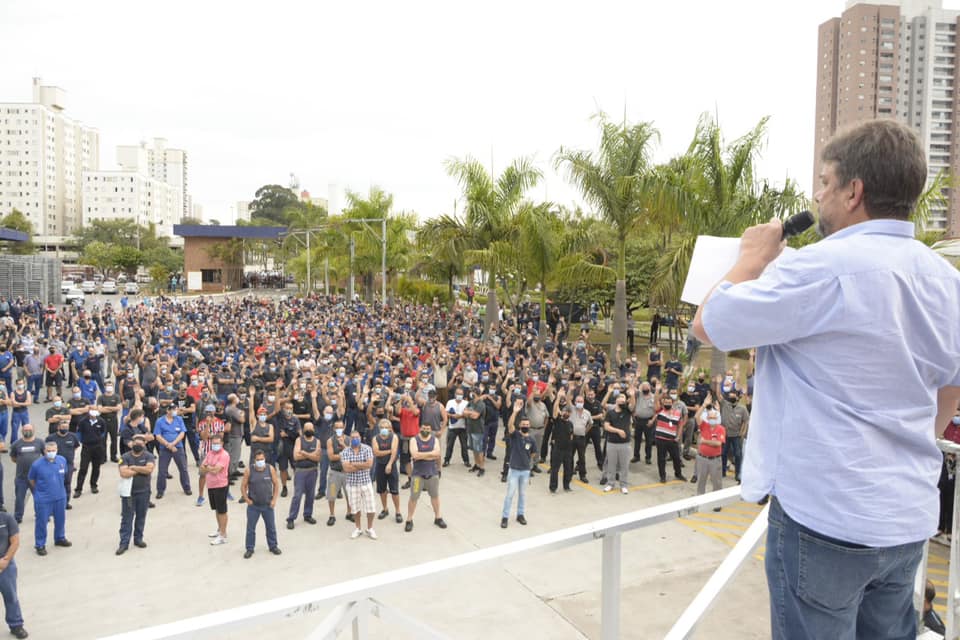
Not every sector is benefiting from the influx of Chinese goods into Brasil. The heavily unionized Brazilian tire industry, which employs 32,000 workers, has taken a beating due to cheap Chinese imports made by low-wage workers.
According to research prepared by a group of Brazilian unions and trade associations, "the share of imported products in the replacement market for passenger and commercial vehicle tires reached an unprecedented 72% in January 2026, while the domestic industry declined from 66% in 2021 to 28% in January 2026.”
“Ten years ago, it was the other way around,” says Márcio Ferreira, president of Sintrabor, which represents over 20,000 tireworkers in Brasil. “It was nearly 70% domestic products—domestic tires—and nearly 30% imported. Now, it is the reverse.”
Márcio says that the desire for a deeper commercial relationship between Brasil and China has led to thousands of tire workers losing their jobs throughout his union.
“What is happening in Brasil today is an absurdly unrestricted freedom of importation—one that, in the medium term, will bring major consequences for domestic industry and for the government as well,” says Márcio Ferreira, president of Sintrabor. “Yet the government, thus far, has failed to take the kind of action that other countries have already taken.”
Ferreira faults the lack of a truly independent trade union movement for keeping labor costs so low in China that Brazilians cannot compete with imports.
“Why are they paying less in China? Look, China has a culture different from ours. The workforce—the labor movement in China—is evolving,” says Ferreira, discussing the relationship between All-China Federation of Trade Unions and the Communist Party of China.
“The workplace union and the company—all demands are submitted to the Party,” says Márcio. “The Party resolves the matter, and the decision is sent back down to the factory floor. So, they do not yet possess that concept of what trade union freedom truly entails.”
Brazilian Unions See Results From Relations With Chinese Unions
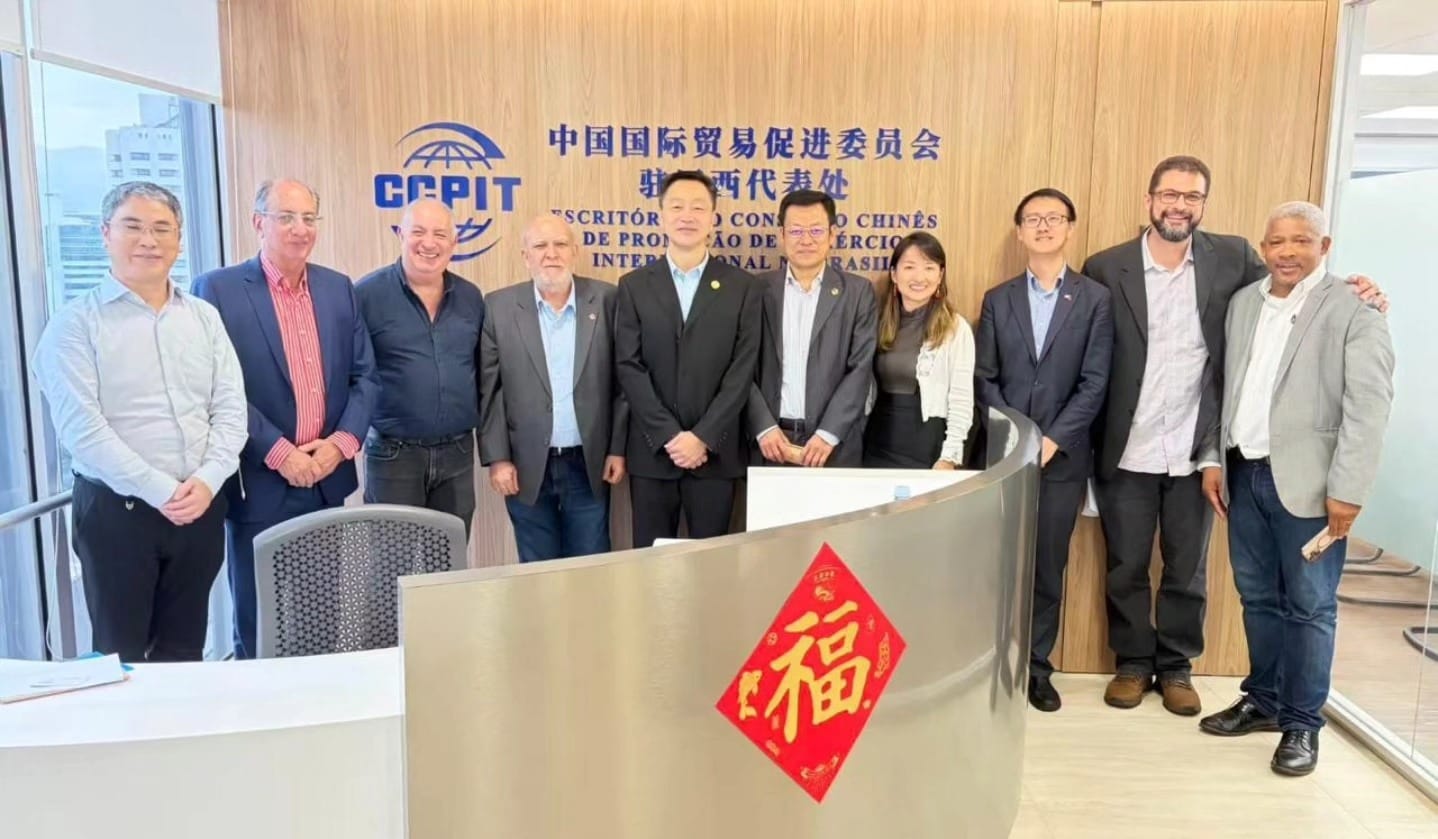
Despite the limitations on unions in China, Brazilian unions and the All-China Federation of Trade Unions have begun meeting. Brazilians unions hope that their relationship with Chinese unions could help them win changes for workers in Brasil.
Brazilian trade unions have also begun regularly meeting with the Chinese ambassador to Brasil. In early March, representatives of three major trade union federations in Brasil, CUT, UGT, and Força Sindical, met with the Brazilian Association of Chinese Companies – ABEC.
“The exchange of information and understanding regarding the behavior and operations of Chinese companies in Brasil is fundamental, as is strengthening dialogue, collective bargaining, and the sustainable development of both countries,” said Miguel Torres.
The meeting garnered Brazilian union leaders an invitation to meet with union and business leaders in China, in June.
Brazilian union leaders like Ricardo Patah, president of UGT, which represents 5.5 million workers in Brasil, say that they have had success in their meetings with Chinese companies. Delivery drivers employed by IFood are represented by Patah’s union.
However, delivery drivers employed by Chinese-owned app companies like Meituan, which operates under the Brazilian brand Keeta, and DiDi, which operates under the brand 99 in Brasil, are not represented by unions. After the March meeting with the ABEC, both Chinese-owned app companies agreed to meet with Patah to discuss unionization. He credits his relationship with the All-China Federation of Trade Unions for helping to open the door.
“The relationship between our unions is very good. We are running a joint campaign,” says Patah. “What we have with the Americans is bigger—it is better. Institutionally—union to union— our relationship with Chinese workers is good, but with the Americans, it is better. We have a meeting today to discuss targeting Amazon.”
As we talk, Patah points to photos on his wall of him shaking hands with Obama. He shows me photos on his wall of him visiting Nissan autoworkers in Mississippi as he discusses the importance of international solidarity.
The UGT even rents out an office to an organizing consultant for SEIU, which helps coordinate campaigns against multinational employers in Brasil. SEIU and UGT have worked together to target major employers like Starbucks and McDonald's. While SEIU has struggled to unionize Starbucks and McDonald's in the United States, Brazilians unions already have collective bargaining agreements with both companies.
Brazilian-American Union Relations at a Crossroad
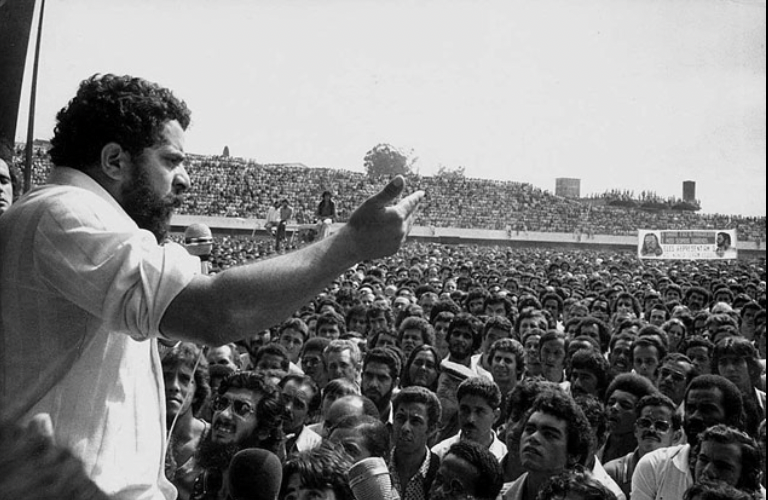
In the 1970s and 1980s, the UAW sent money and staff to support autoworkers led by Lula, who went on strike against the dictatorship. The solidarity came at a time when many American employers like GM and Ford were investing heavily in Brasil. During the 1980s, the UAW successfully pressured these employers to pay Brazilian workers higher wages and improve working conditions.
When American workers came under attack, Brazilians were right there to march side-by-side against their common employers, where Brazilian union leaders had union contracts and American unions did not.
When the UAW attempted unsuccessfully to organize at Nissan in Mississippi in 2017, unionized Nissan workers in Brasil protested in solidarity with workers struggling in Mississippi. They even sent delegations of Brazilian trade union leaders to denounce union busting in Mississippi. Many union leaders were shocked by what they saw in Mississippi.
In 2013, Lula, then retired after his first two terms as president, even attended the UAW conference, where he met with Mississippi Nissan leaders. Nissan union leaders were impressed.
“When he stuck his neck out for workers in Brasil, it made me realize he really cares about the labor movement,” Mississippi Nissan worker Jeff Moore told People’s World in 2013. “I think it’s going to move my co-workers to get motivated toward a vote for the union.”
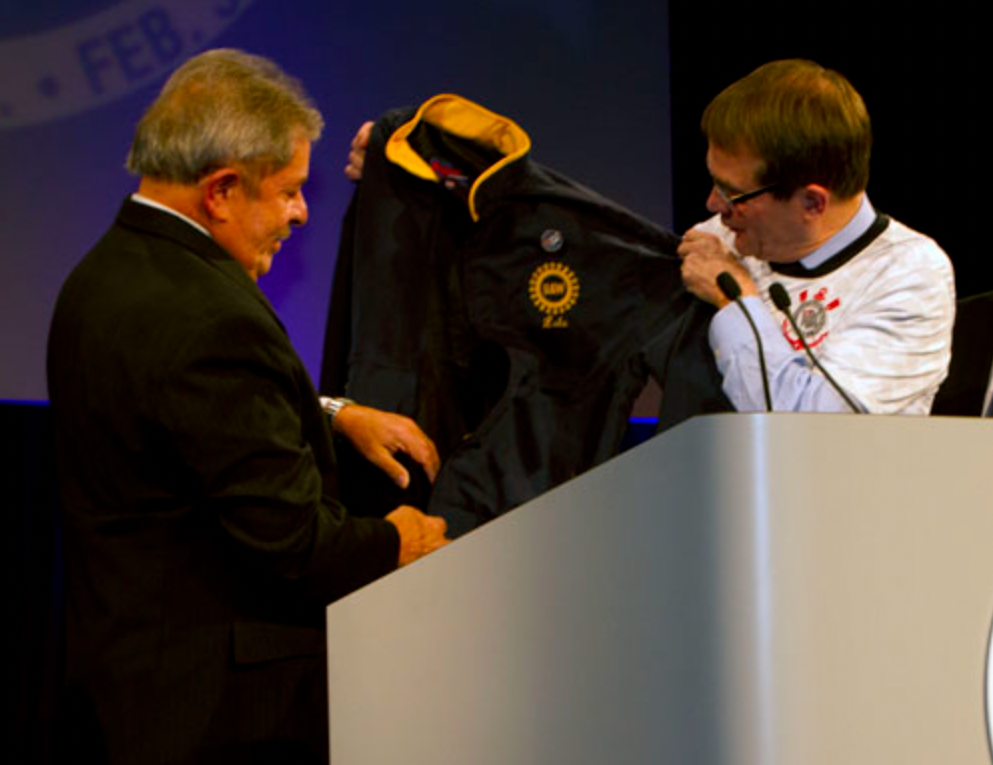
At the conference, the UAW even made Lula an honorary member. Then-UAW President Bob King handed Lula a UAW jacket, and in return, Lula handed King a Corinthians jersey, the Corinthians being the Brazilian equivalent of the Green Bay Packers. (Full disclosure: the author of this article is a diehard Corinthians fan!)
When Bolsonaro passed anti-union laws and publicly bashed unions, Brazilian unions saw a massive decline in membership, from 12% to 8% of the total workforce in just 4 years under Bolsonaro. To fight back, Brazilian unions passed out flyers of American President Joe Biden making pro-union statements during the election campaign.
“Bolsonaro has been going after unions so hard. He’s been blaming unions for Brasil’s economic problems,” Rubens Fernandez Silva, the Secretary General of the São Paulo hotel workers union Sinthoresp told Payday in 2022. “It’s very powerful when the leader of the most powerful country in the world speaks out in favor of unions.”
In 2022, Biden helped Lula get elected by repeatedly making statements aimed at the Brazilian military that the United States would not support a coup in Brasil. The support of the United States is part of the reason why Bolsonaro’s attempt to get Brazilian military leaders to back a coup failed. Some Brazilian military leaders even testified against Bolsonaro, when he was convicted and sentenced to jail for attempting to assassinate Lula and orchestrate a coup.
In 2023. President Lula and Biden went to the United Nations and launched the “Partnerships for Workers RIghts” aimed at getting nations around the world to work together to promote union rights.
“The two largest democracies in the Western hemisphere are standing up for human rights around the world and the hemisphere, and that includes workers’ rights,” said President Biden at the launch of the partnership.
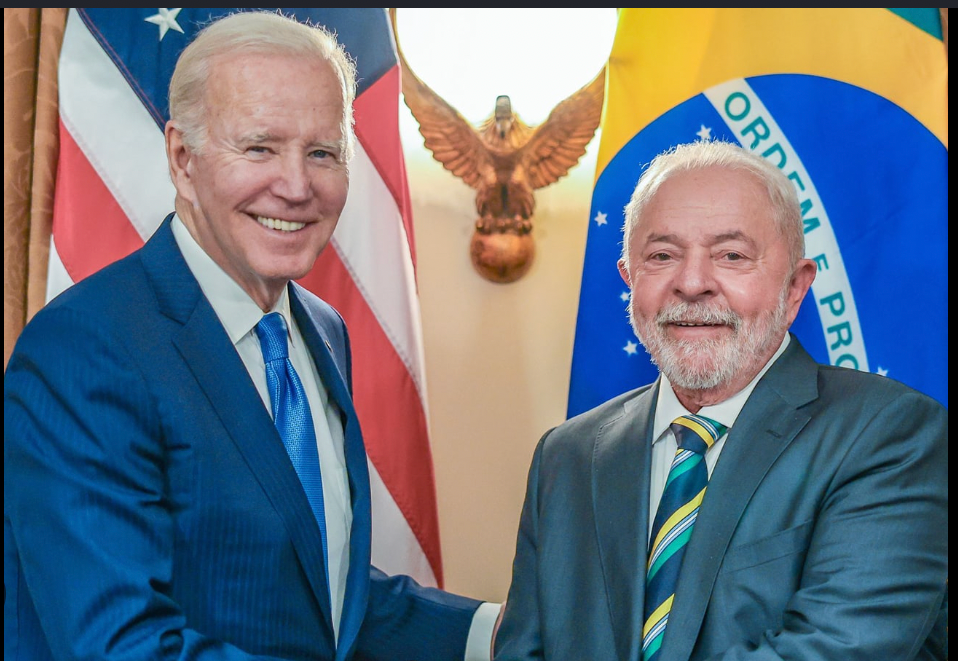
But now, under Trump, the American government no longer supports unionization worldwide. In 2025, Trump cut more than $500 million in grants aimed at promoting workers' rights. The move devastated the AFL-CIO’s Solidarity Center, which promotes international solidarity projects between unions.
As a result of the budget cuts, the AFL-CIO was forced to close Solidarity Center’s office in Brasil.
“One of the first consequences was Trump shut it down,” says UGT President Ricardo Patah. “We have important work with the Solidarity Center.”
A few years prior, in 2022, former UAW President Ray Curry also cut the salary of the UAW’s organizing consultant in Brasil, a move that was protested formally in letters by Miguel Torres, the president of the 2.1 million-member Força Sindical. The Fain Administration has yet to renew funding to UAW's solidarity efforts with Brasil, but Brazilian trade union leaders wish it would.
“We had a very strong connection, especially with the UAW. We would go there, they would come here, and we held virtual meetings. There was a whole process in place to handle our request, whenever we faced a problem here that required assistance, they would step in to help us. So, we accomplished a great deal together,” says Miguel Torres. “Then, a rift developed. Today, that connection is gone.”
Still, despite weakening ties as China comes into the Brazilian economy, Miguel Torres believes there is a path forward to renewing solidarity between American and Brazilian unions.
“I believe the path forward is to restore it,” says Torres. “I think it is important to show American workers—to let them know—that our struggle here remains very strong. From the standpoint of resistance against the system, it’s important to remember what we know we have endured together.”
